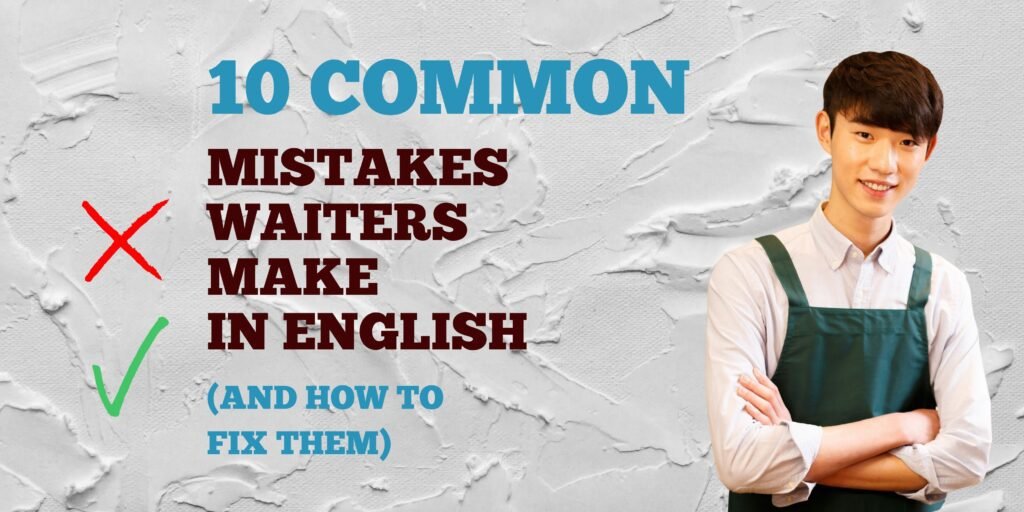
Here are 10 things you should never say to a restaurant guest, and what to say instead. A guest can love the food and still leave unhappy because of one small phrase.
You don’t need perfect English to fix this. You just need a few better phrases. Tap 🔊 to hear each one.
Want to practise this with video? See the English for Waiters course →
Close a door, or open one
Here is the idea behind every phrase on this list.
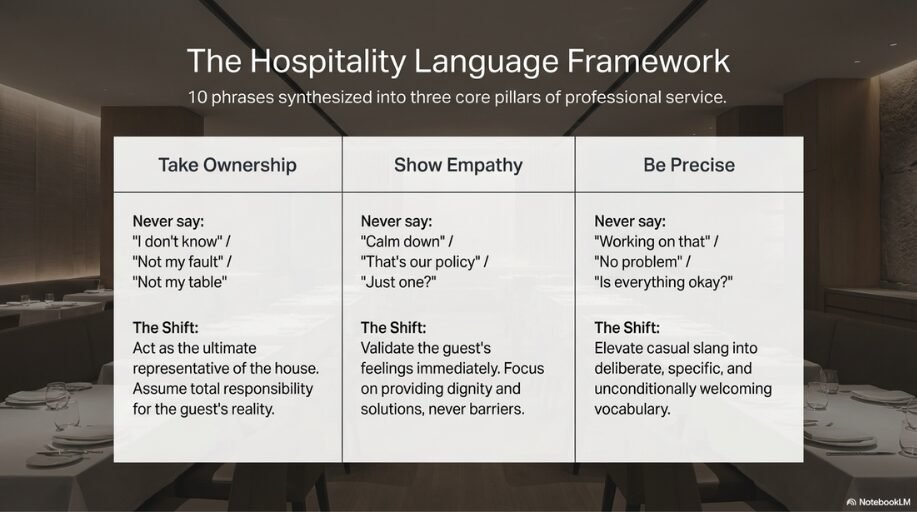
Bad phrases close a door. “I don’t know.” “Not my table.” “That’s our policy.” The talk stops, and the guest feels alone.
Good phrases open a door. They start with an action: “Let me…” or “I’ll…”. The guest hears that someone is helping.
So when you want to say no, ask yourself: what can I do? Say that instead.
When there’s a problem
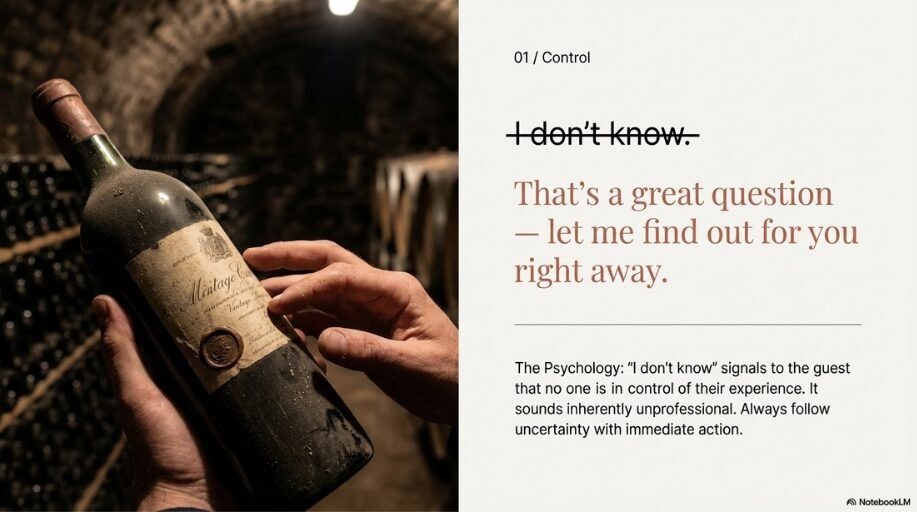
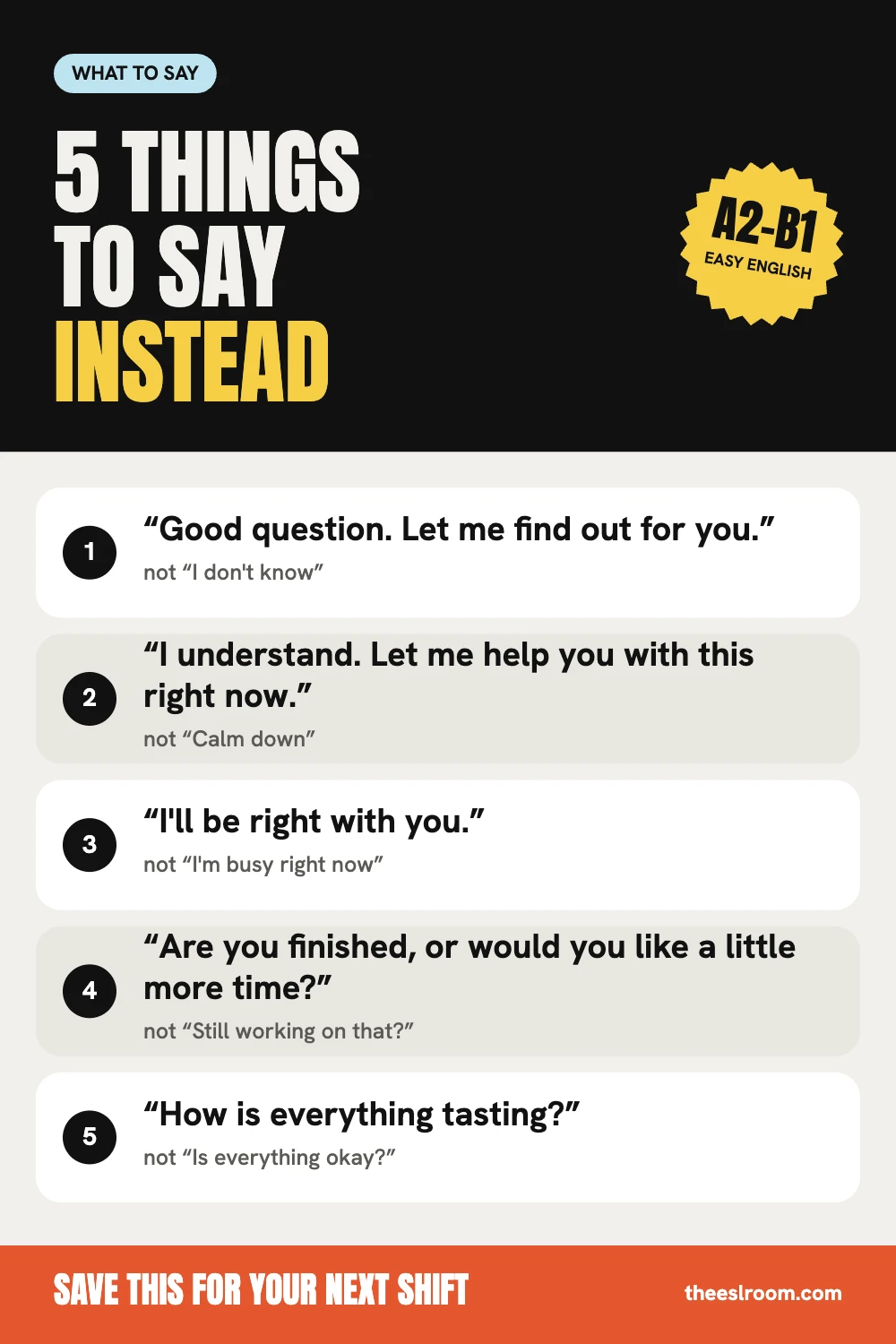
“Good question. Let me find out for you.”
Instead of “I don’t know.” Then really go and find out.
“I’m sorry about that. Let me sort it out for you.”
Instead of “It’s not my fault.” Sort out = fix. Guests want a fix, not a reason.
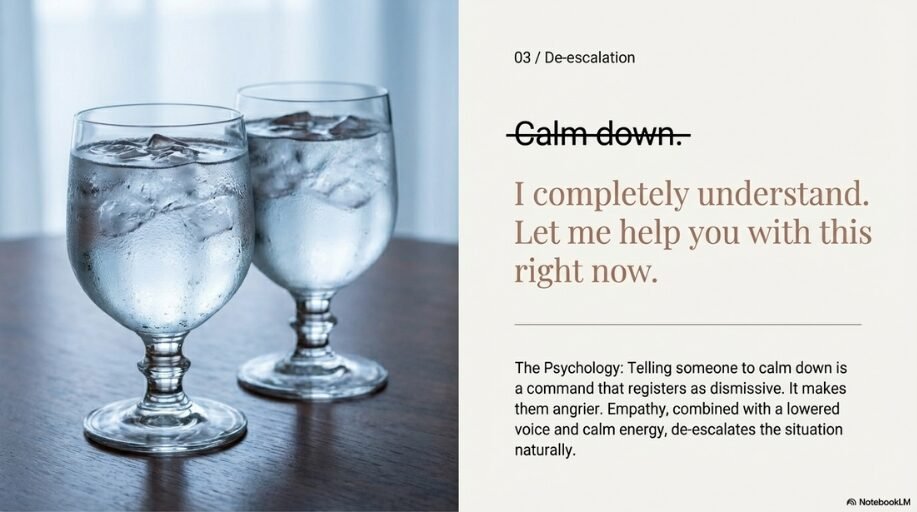
“I understand. Let me help you with this right now.”
Instead of “Calm down.” Telling people to calm down usually makes them angrier.
“We can’t do that tonight, but here’s what I can do.”
Instead of “That’s our policy.” Then offer something you can do.
When you’re busy
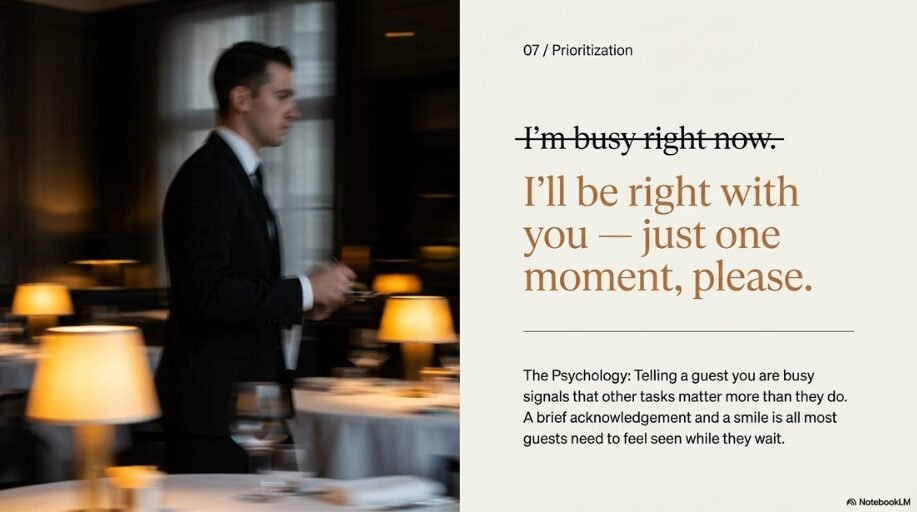
“I’ll be right with you.”
Instead of “I’m busy right now.” A smile and these four words are enough.
“Good evening! A table for one? Right this way.”
Instead of “Just one?” “Just” can make a guest dining alone feel small.
“Let me find your server for you.”
Instead of “That’s not my table.” Guests don’t know who has which table, and they don’t need to.
During the meal
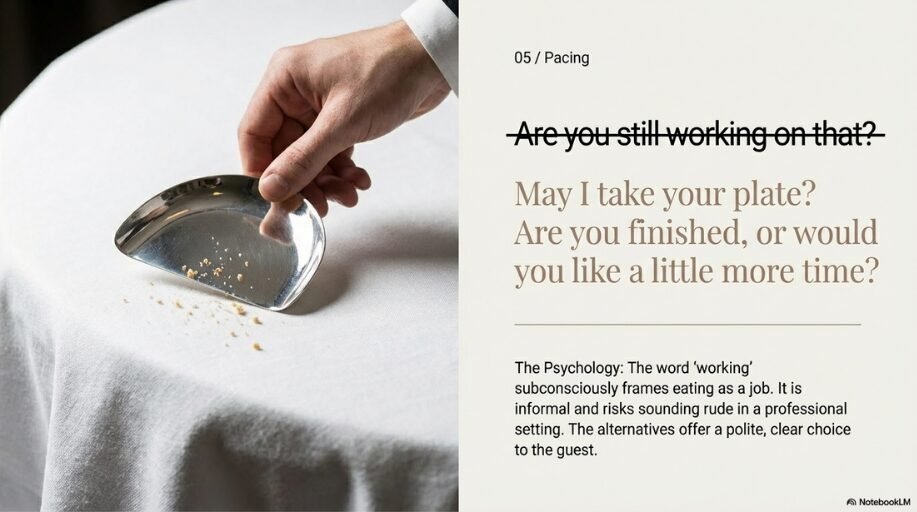
“Are you finished, or would you like a little more time?”
Instead of “Are you still working on that?” “Working” makes eating sound like a job.
“My pleasure.”
Instead of “No problem.” “No problem” is common, but “My pleasure” or “Of course” sounds warmer.
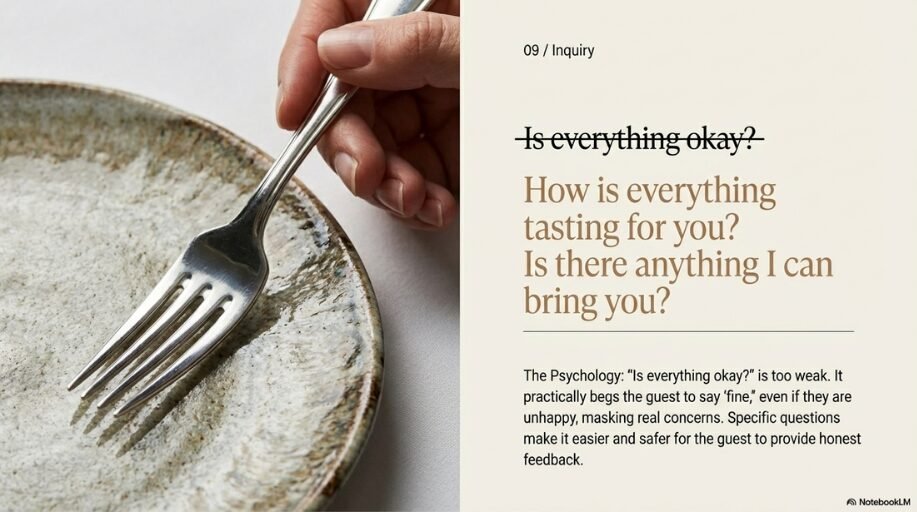
“How is everything tasting?”
Instead of “Is everything okay?” A specific question gets a real answer.
Save this card and look at it before your next shift. On Pinterest? Pin it so you can find it fast.
What to say instead: a real dialogue
Waiter: Good evening! How is everything tasting?
Guest: The pasta is great. Does the cake have nuts in it? I’m allergic.
Waiter: Good question. Let me check with the kitchen for you.
Waiter: Thanks for waiting. The cake has almonds, so it’s not safe for you.
Guest: Oh no. Can you make it without them?
Waiter: We can’t do that tonight, but here’s what I can do. The lemon sorbet has no nuts.
Guest: Perfect. I’ll have that, please.
Waiter: My pleasure. I’ll bring it right out.
See it? No “I don’t know” and no flat “no”. Every answer opens a door.
Learn 100+ phrases like these.
Short video lessons for waiters. Self-paced. $19.99, one payment.
Get the course →
Common mistakes
These short phrases come from direct translation. They sound rude, even when you don’t mean it.
Quick quiz
1. A guest asks about an ingredient. You don’t know. What do you say?
Open a door: say what you’ll do, then do it.
2. An upset guest is talking loudly. What do you say?
“Calm down” makes it worse. Show you understand and act.
3. Which question gets a real answer?
A specific question makes it easy to tell you about a problem.
FAQ
Is it rude to say “no problem” to a guest?
Not really. Many people say it. But “Of course” or “My pleasure” sounds more professional, especially in smart restaurants.
What should I say instead of “I don’t know”?
Say: “Good question. Let me find out for you.” Then go and find the answer.
Why shouldn’t I say “Are you still working on that?”
“Working” makes eating sound like a job, and many guests don’t like it. Ask: “Are you finished, or would you like a little more time?”
Related guides
- 10 common mistakes waiters make in English
- How to greet an angry customer: a simple script
- Formal vs casual restaurant English
Ready to Go Further?
Ready to Master Restaurant English?
These free articles and scenarios are a great start, but if you want a complete, structured system for learning restaurant English, consider our full course.

English for Waiters includes:
✅ 22+ video lessons covering every restaurant situation
✅ Real restaurant scenarios with native pronunciation
✅ Interactive pronunciation practice
✅ Downloadable phrase guides
✅ Lifetime access with free updates