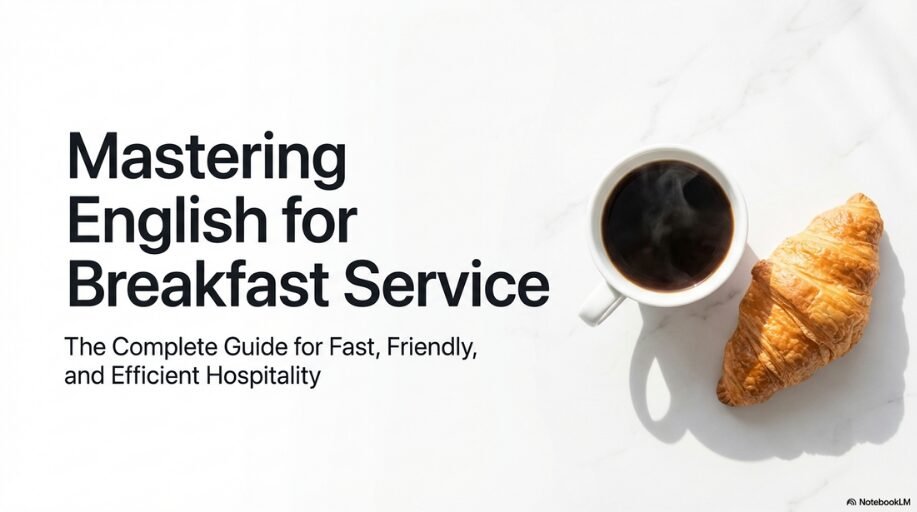
English for breakfast service is short, fast and friendly. Guests are tired, hungry and often in a hurry.
This guide gives you easy phrases for every step: the greeting, the buffet, eggs, coffee and the bill. Tap 🔊 to hear each one.
Want to practise this with video? See the English for Waiters course →
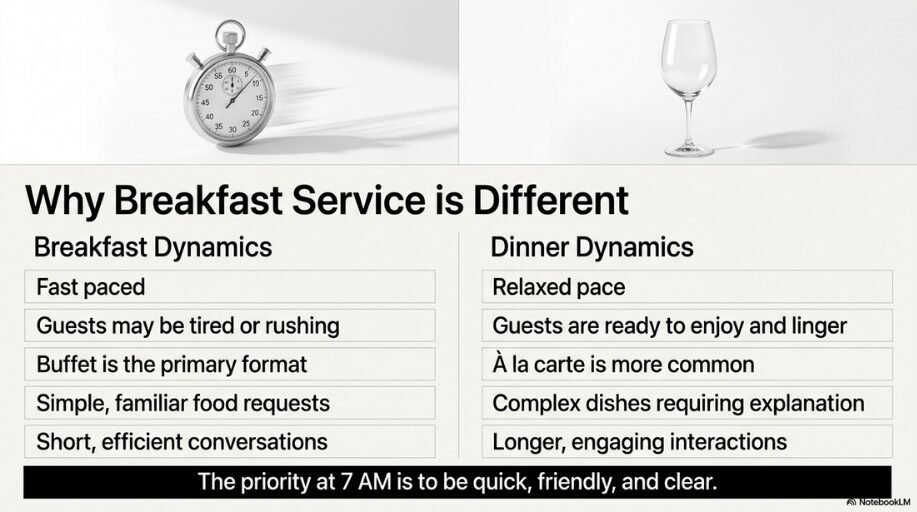
Why breakfast is different: the 3 Fs
At dinner, guests want to relax. At breakfast, they want three things: fast, friendly and few words.
- Fast: bring coffee first. Coffee makes everyone happier.
- Friendly: smile and say “Good morning.” It is enough.
- Few words: short questions. “Tea or coffee?” is better than a long sentence.
Many guests are not fully awake. Short, clear English helps them, and it helps you too.
Step 1: Greet and seat the guest
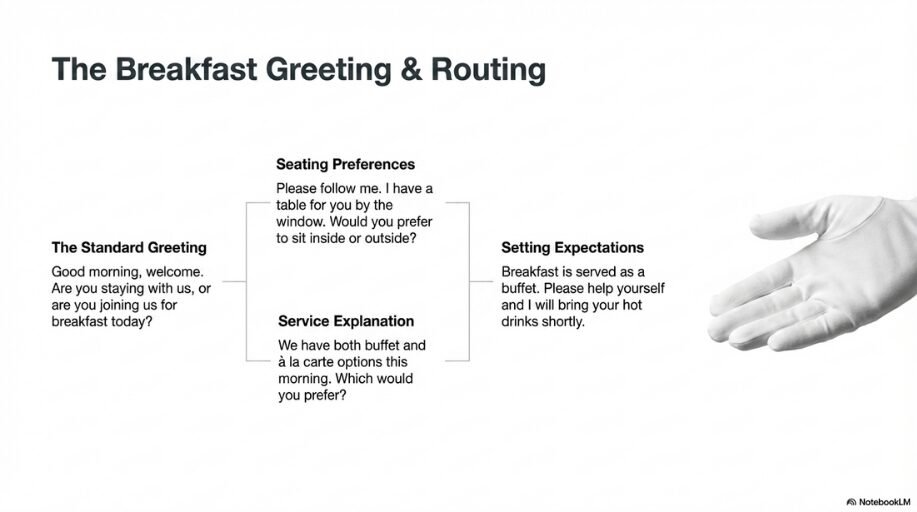
“Good morning! Welcome.”
Say this as soon as the guest walks in.
“Are you staying with us, or just joining us for breakfast?”
In a hotel, this tells you if breakfast is included in the room.
“Could I have your room number, please?”
Hotel guests often sign breakfast to their room.
“Please follow me. Would you like a table by the window?”
Walk with the guest. Don’t just point.
Step 2: Explain the buffet
A buffet = the food is on a long table and guests take it themselves.
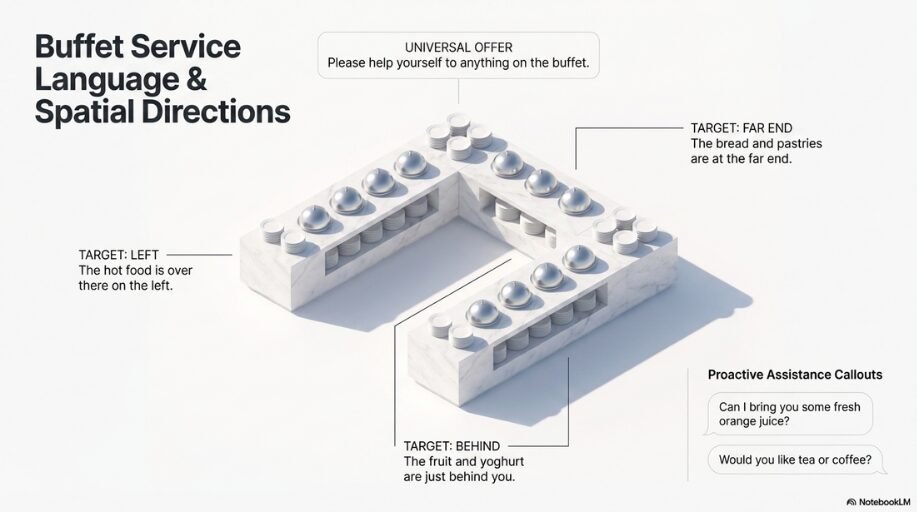
“Breakfast is served as a buffet. Please help yourself.”
“Help yourself” = take what you want.
“The hot food is on the left, and the fruit is at the end.”
Use simple places: left, right, at the end, behind you.
“Would you like tea or coffee?”
Ask this right after the guest sits down.
Step 3: Eggs, toast and coffee
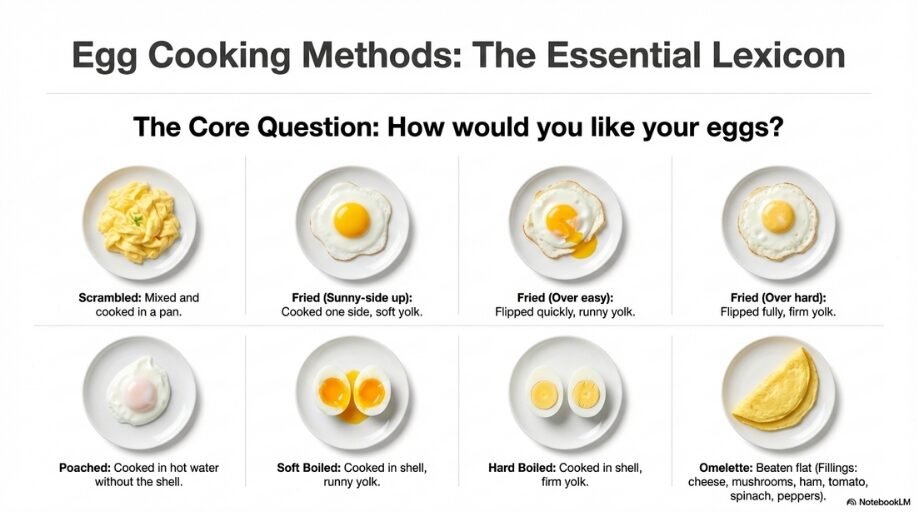
Eggs are the most important words at breakfast. Guests ask for them in very exact ways.
- Scrambled = mixed and cooked in a pan
- Sunny side up = fried on one side, the yolk (yellow part) is soft
- Over easy = fried on both sides, the yolk is still soft
- Poached = cooked in hot water, without the shell
- Boiled = cooked in the shell (soft or hard)
- Omelette = flat eggs, often with cheese, ham or mushrooms inside
“How would you like your eggs?”
The most common breakfast question.
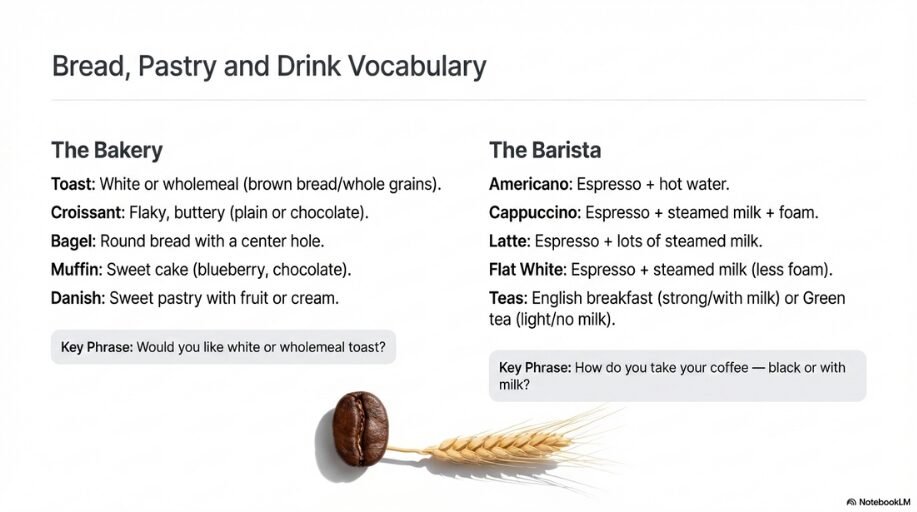
“Would you like white or brown toast?”
Some hotels say “wholemeal” for brown bread.
“How do you take your coffee? With milk?”
“How do you take it?” = how do you like it?
Step 4: Take an order from the menu
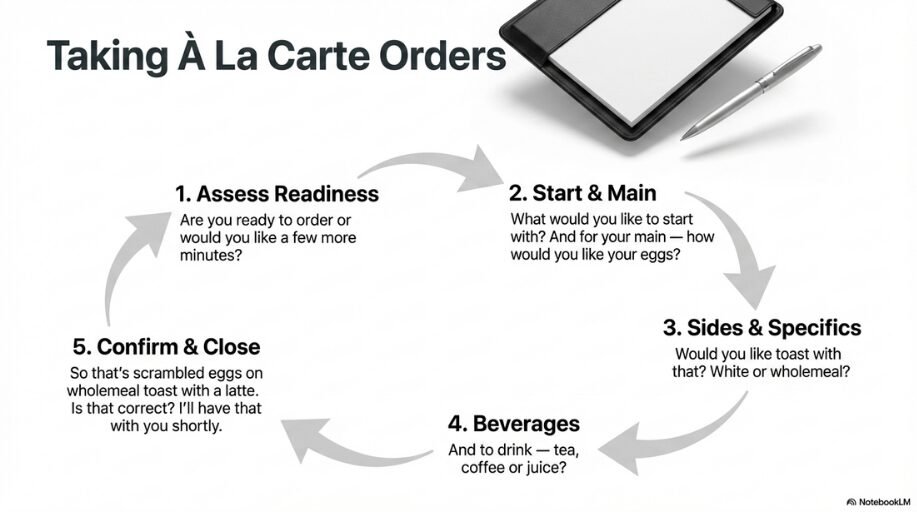
Some guests don’t want the buffet. They order from the menu. This is called à la carte.
“Are you ready to order, or do you need a few minutes?”
Gives the guest an easy way to say “not yet”.
“So that’s poached eggs on brown toast and a latte. Is that right?”
Always say the order back. It stops mistakes.
Step 5: Diets, checking back and clearing
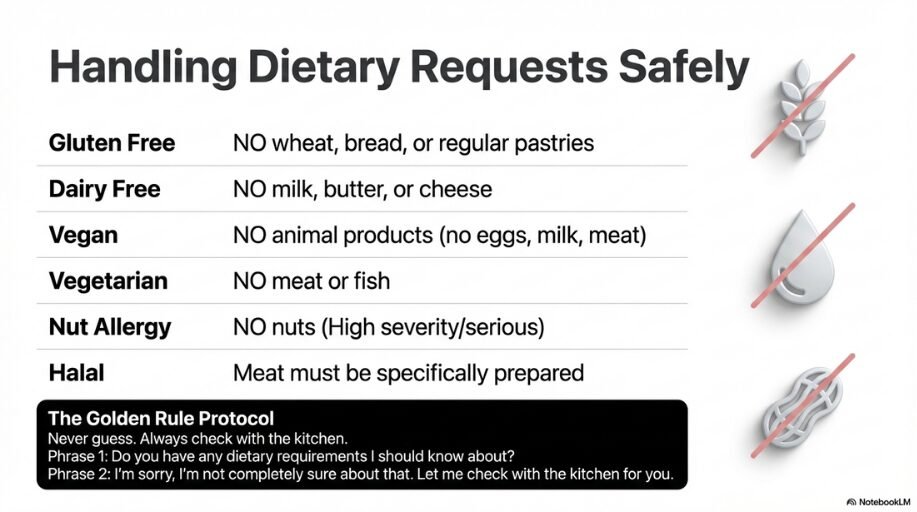
“Do you have any allergies I should know about?”
Ask every guest who orders from the menu.
“Let me check with the kitchen for you.”
If you are not 100% sure, never guess. Check.
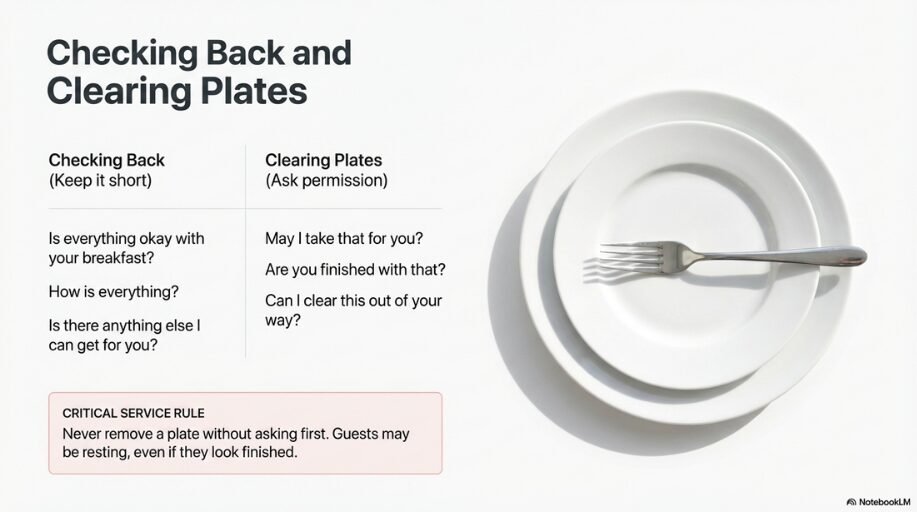
“Is everything okay with your breakfast?”
Check back two or three minutes after the food arrives.
“Are you finished with this, or still eating?”
Always ask before you take a plate.
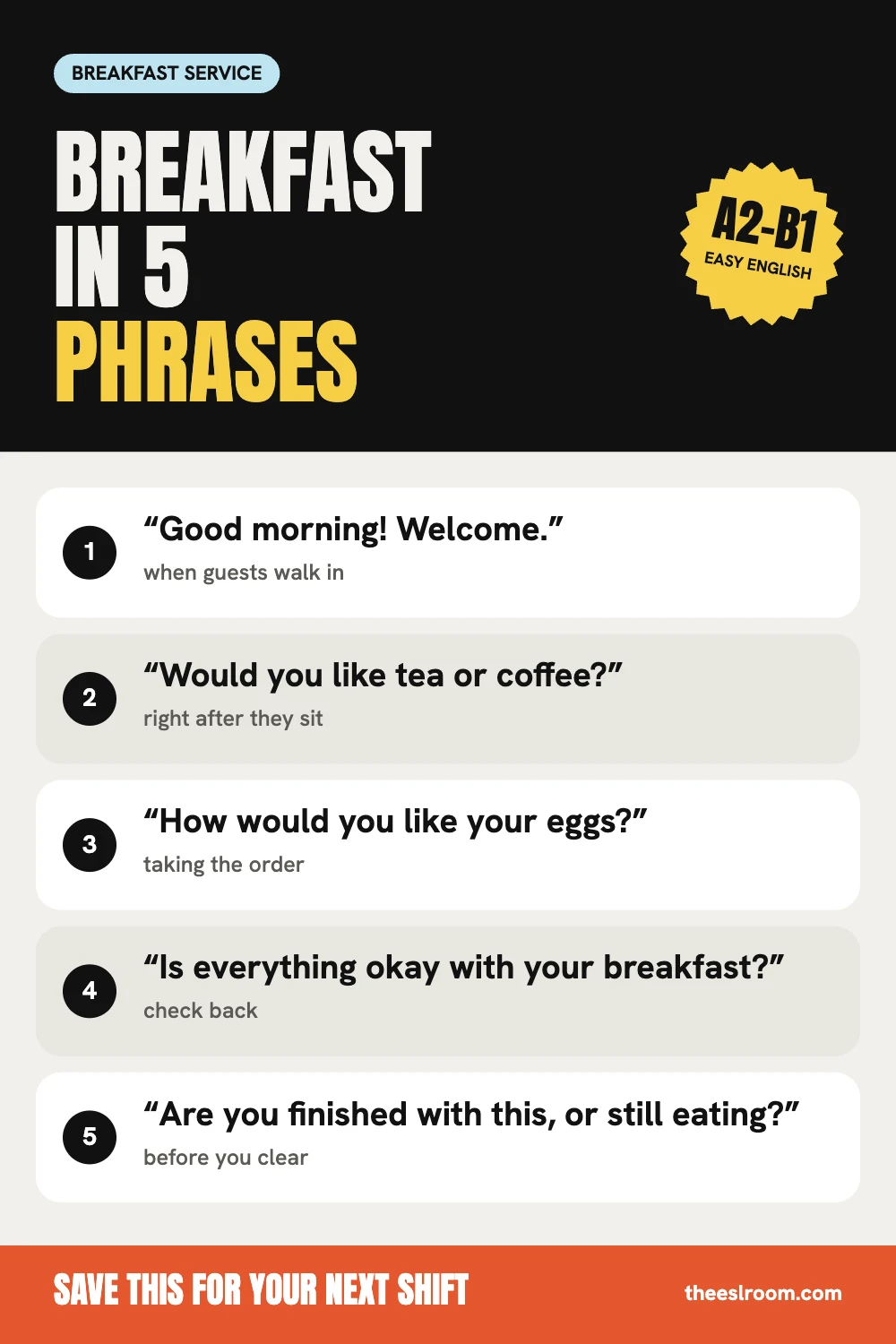
Save this card and look at it before your next shift. On Pinterest? Pin it so you can find it fast.
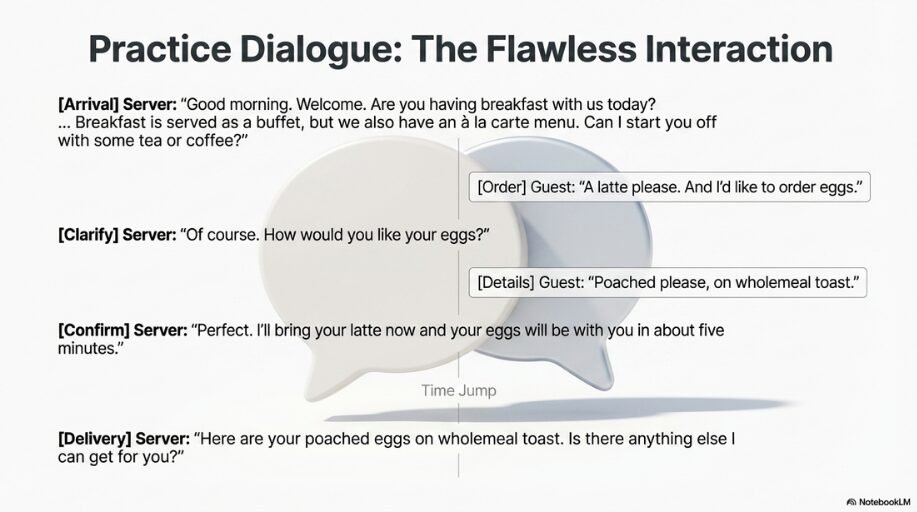
English for breakfast service: example dialogue
Waiter: Good morning! Welcome. Are you staying with us?
Guest: Yes, room 214.
Waiter: Great. Please follow me. Would you like tea or coffee?
Guest: A latte, please. And can I order some eggs?
Waiter: Of course. How would you like your eggs?
Guest: Poached, please. On brown toast.
Waiter: So that’s poached eggs on brown toast and a latte. Is that right?
Guest: Perfect, thank you.
Waiter: Your latte is coming now. The eggs will be about five minutes.
See the 3 Fs? Coffee comes first. Every question is short. The guest gets fast, friendly service.
Learn 100+ phrases like these.
Short video lessons for waiters. Self-paced. $19.99, one payment.
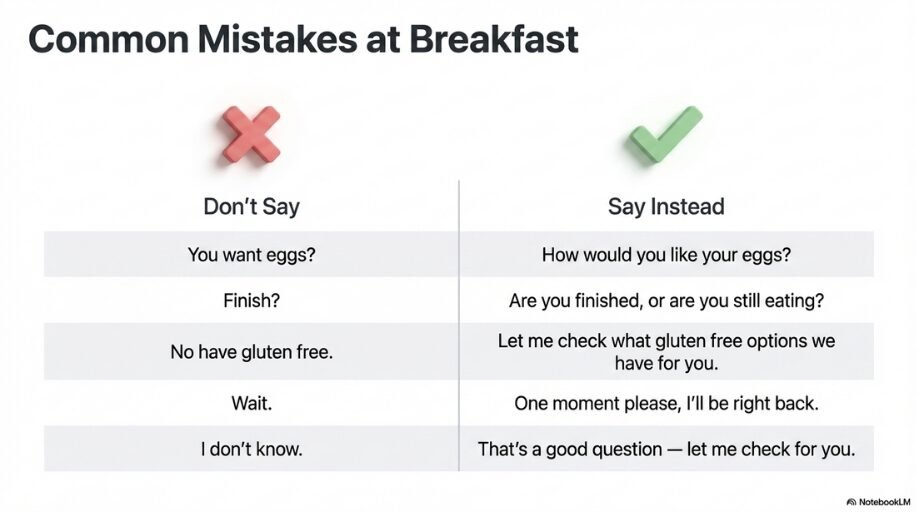
Get the course →Common mistakes
Quick quiz
1. A guest sits down. What do you offer first?
At breakfast, a hot drink comes first. It’s fast and guests love it.
2. What does “over easy” mean?
Over easy eggs are turned over quickly, so the yolk stays soft.
3. A guest asks for gluten free bread. You are not sure. What do you say?
Never guess about food needs. Always check.
FAQ
What does “breakfast is served” mean?
It means breakfast is ready and available. Hotels often say “Breakfast is served from 7 to 10” to give the times.
What do you say to guests at breakfast?
Start with “Good morning! Welcome.” Then ask “Would you like tea or coffee?” Keep every question short and friendly.
How do I ask how a guest wants their eggs?
Say “How would you like your eggs?” If they are not sure, offer three: “Scrambled, fried or poached?”
Related guides
- How to ask about food allergies and diets
- English for coffee, tea and other drinks
- Taking orders script: 12 phrases waiters can use
Ready to Go Further?
Ready to Master Restaurant English?
These free articles and scenarios are a great start, but if you want a complete, structured system for learning restaurant English, consider our full course.
English for Waiters includes:
✅ 22+ video lessons covering every restaurant situation
✅ Real restaurant scenarios with native pronunciation
✅ Interactive pronunciation practice
✅ Downloadable phrase guides
✅ Lifetime access with free updates