Proven techniques to increase your sales and tips—without making customers uncomfortable
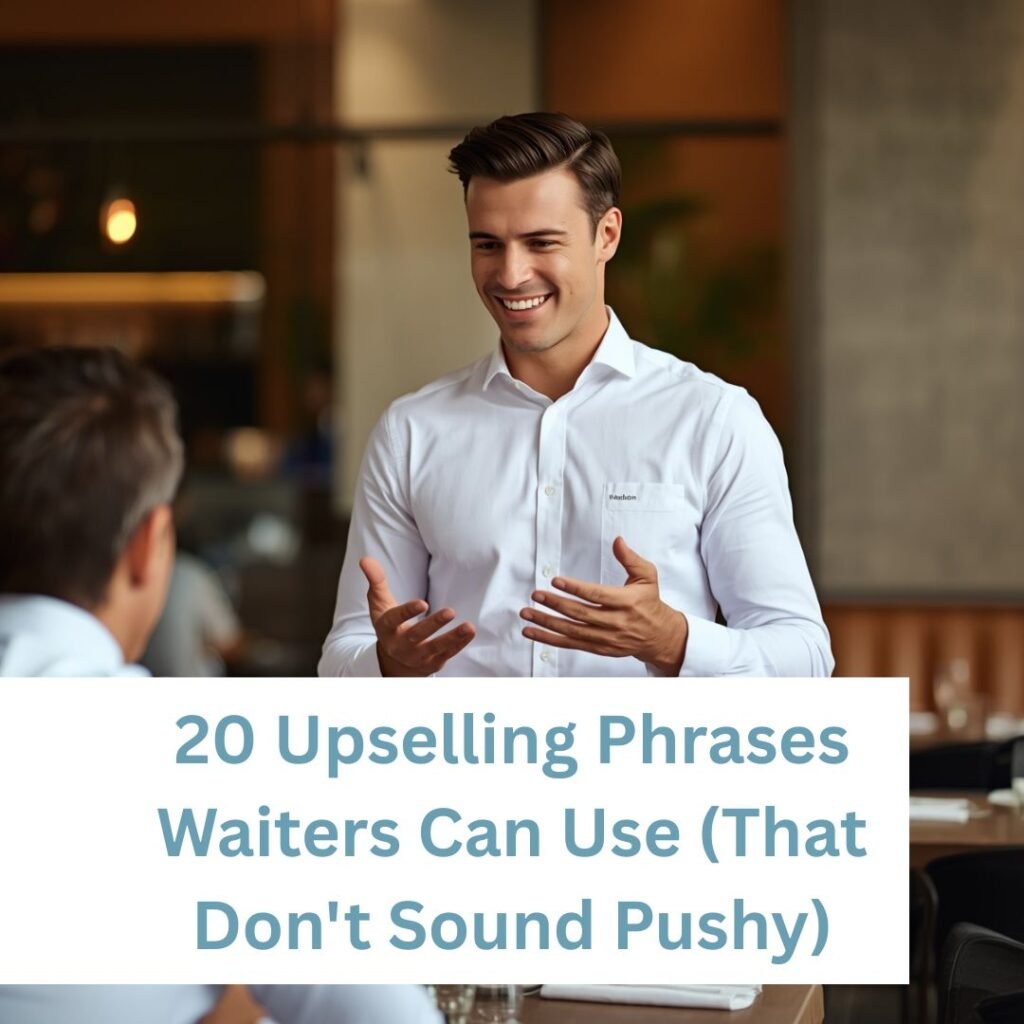
Every experienced waiter knows the secret: upselling phrases are the difference between a £30 table and a £50 table. But most waiters struggle with this because they don’t want to sound pushy or annoying. The truth? There are specific phrases that feel helpful and natural while dramatically increasing your sales—and your tips.
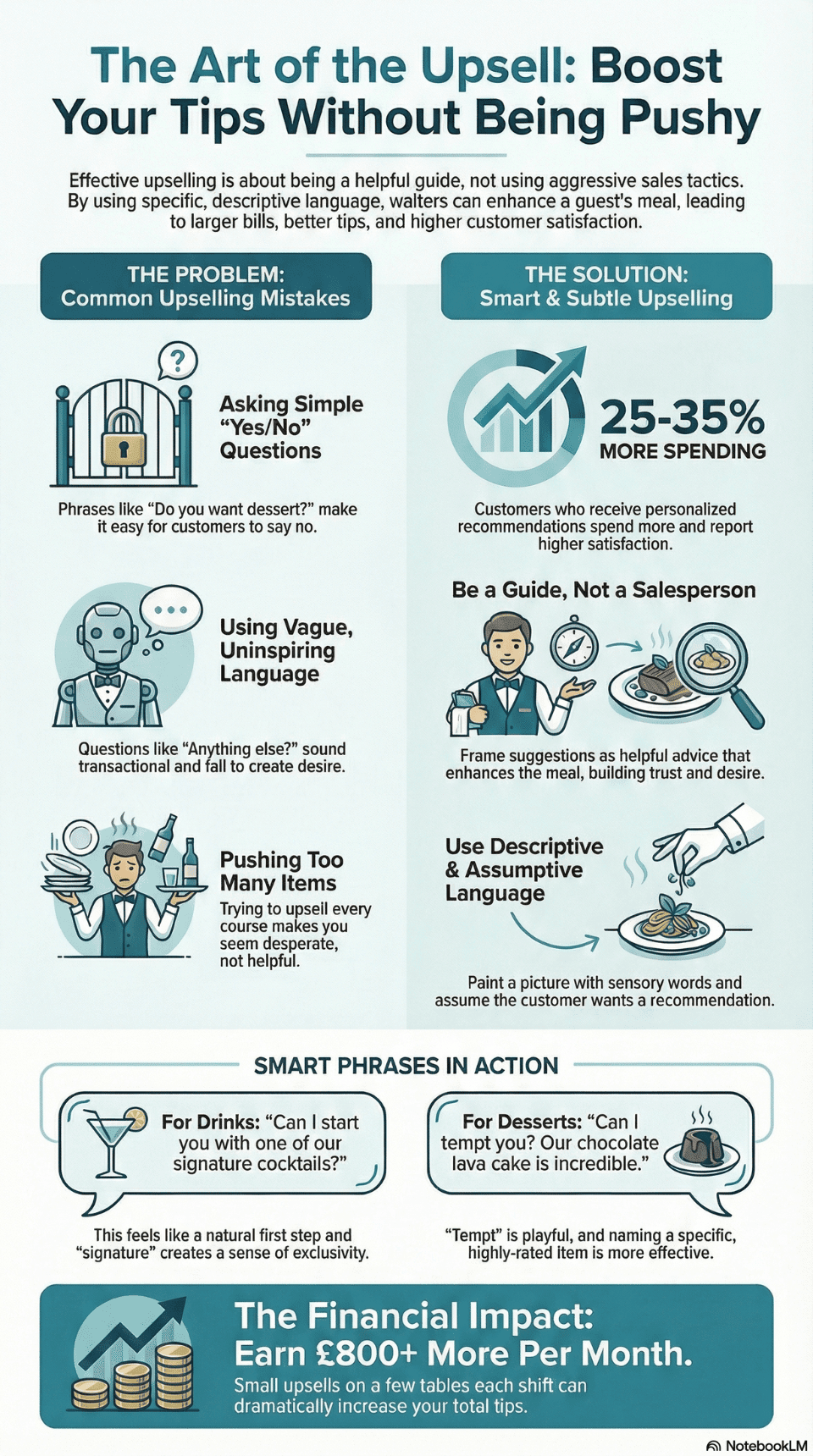
The problem isn’t upselling itself. The problem is how you do it. When you say “Do you want dessert?” you’re giving customers an easy out—they’ll probably say no. But when you say “Our chocolate lava cake is incredible—can I tempt you?” you’re creating desire. You’re painting a picture. You’re helping them enjoy their meal more.
In this guide, you’ll learn 20 proven upselling phrases that professional waiters use every single day. These aren’t pushy sales tactics. They’re helpful suggestions that make customers happy while putting more money in your pocket. You’ll see exactly what to say for drinks, appetizers, sides, desserts, and wine pairings—with real examples you can use tonight.
By the end of this article, you’ll have a complete toolkit of restaurant sales phrases that feel natural, boost your confidence, and significantly increase your earnings.
Prefer to Listen – Here’s the podcast.
Why Upselling Matters for Waiters
Let’s start with the numbers. The average restaurant table spends £30-40 per person. With effective upselling techniques, that same table can easily spend £45-55 per person. That’s an extra £15-20 per person—and since tips are based on the total bill, your tip increases proportionally.
Here’s a simple example. A table of four spending £120 total leaves you a £24 tip at 20%. But if you successfully upsell them to £160 total, your tip becomes £32. That’s an extra £8 from one table. Do that five times per shift, and you’ve made an additional £40. Over a month, that’s £800-1,000 in extra income—just from using better phrases.
The psychology behind this is fascinating. Customers actually appreciate good suggestions. When someone is celebrating a birthday or anniversary, they want to make it special. They’re hoping you’ll recommend something amazing. When you confidently suggest “Our champagne pairs beautifully with the oysters,” you’re not being pushy—you’re being helpful. You’re enhancing their experience.
According to restaurant industry research, customers who receive personalized recommendations spend 25-35% more than those who don’t.ndustry research, customers who receive personalized recommendations spend 25-35% more than those who don’t. They also report higher satisfaction with their meal. Why? Because you helped them discover something they wouldn’t have ordered otherwise. You made their dining experience better.
The key is using language that feels like a recommendation from a friend rather than a sales pitch from a salesperson. That’s exactly what these 20 upselling phrases accomplish.
The Psychology Behind Effective Upselling Phrases
Before we dive into specific phrases, you need to understand why certain words work and others don’t. The difference between “Do you want fries?” and “Would you like to add our truffle fries?” is massive—and it’s not just about the word “truffle.”
The first phrase is a yes/no question. It makes saying no easy. The second phrase uses “would you like to add,” which implies the fries are a special enhancement. It suggests the customer is treating themselves. The word “our” creates ownership and pride in the product. And “truffle” adds perceived value.
Effective upselling phrases share several characteristics. They describe the item specifically rather than generically. Sales psychology research shows that specific, descriptive language increases purchase intent. They use sensory language that creates mental images. They position the upsell as helpful rather than profit-driven. And they give customers permission to treat themselves.
Notice how professional waiters never say “anything else?” That phrase screams “I’m trying to finish this interaction.” Instead, they say things like “Can I start you with one of our signature cocktails?” That phrase suggests expertise, implies quality, and feels welcoming rather than transactional.
The best server sales techniques also use assumptive language. Instead of asking “if” customers want something, you assume they do and simply ask “which” version they prefer. For example, “Would you like the regular fries or the loaded fries?” assumes they’re getting fries—they’re just choosing the type.
Timing matters too. You don’t suggest dessert when customers first sit down. You wait until they’re satisfied with their meal, relaxed, and in a good mood. You read their body language. If they’re rushing, you don’t push extras. If they’re celebrating and lingering over conversation, that’s when you suggest the dessert sampler.
Now let’s look at exactly what to say in every situation.
5 Upselling Phrases for Drinks
The first opportunity to upsell comes immediately when customers sit down. How you suggest drinks sets the tone for the entire meal and can add £10-20 to the bill instantly.
1. “Can I start you with one of our signature cocktails?”
This phrase works because “signature cocktails” suggests something special and unique to your restaurant. “Start you with” implies this is the natural first step. It’s assumptive without being pushy.
When to use it: As soon as customers are seated and have menus
Why it works: The word “signature” creates exclusivity and FOMO (fear of missing out)
Alternative versions:
- “Can I get you started with drinks? Our mojitos are really popular tonight”
- “Before you look at the menu, can I tell you about our featured cocktails?”
2. “We have [specific wine] on special tonight—it’s excellent with the [dish]”
This phrase combines an upsell with a wine pairing recommendation. It positions you as knowledgeable and helpful rather than just trying to sell more.
When to use it: After customers order their food, before they ask for wine
Why it works: The word “special” implies value, and suggesting a pairing shows expertise
Example: “We have a beautiful Pinot Noir on special tonight—it pairs perfectly with the lamb shank you ordered”
3. “Our [drink] is really refreshing on a day like this”
This phrase acknowledges the weather or situation and suggests the drink as a solution. It feels conversational and friendly.
When to use it: Hot days for cold drinks, cold days for hot drinks, celebrations for champagne
Why it works: It’s contextual and feels like genuine advice rather than a sales pitch
Examples:
- “Our sangria is perfect for a hot summer evening like this”
- “Our Irish coffee is exactly what you need on a cold night”
4. “Can I bring you a bottle instead of glasses? It’s actually better value”
This phrase upgrades customers from wine by the glass to a full bottle. It positions the upsell as saving them money, which removes resistance.
When to use it: When two or more people order the same wine by the glass
Why it works: Customers feel smart for getting better value, and you’ve increased the bill by £20-30
Follow-up: “A bottle is £28, and two glasses would be £18, so you get much more for just a bit extra”
5. “Would you like to make that a double for just £2 more?”
This simple phrase works for spirits and can increase the check with minimal resistance. The small price increase (£2) makes it feel like a no-brainer.
When to use it: When customers order spirits like gin, vodka, whiskey, or rum
Why it works: The phrase “just £2 more” makes the upgrade seem trivial compared to the benefit
5 Phrases for Appetizers That Increase Sales
Appetizers are pure profit for restaurants and can add £8-15 per person to the bill. These phrases make ordering starters feel natural and appealing.
6. “Can I get you started with some appetizers while you decide on mains?”
This phrase assumes customers will want appetizers and positions them as something to enjoy while they’re still browsing the menu.
When to use it: Right after taking drink orders, before food orders
Why it works: “While you decide” makes appetizers feel practical, not indulgent
Follow-up: “Our calamari and bruschetta are perfect for sharing”
7. “Our [appetizer] is perfect for sharing—most tables get at least one”
The phrase “most tables” provides social proof. The phrase “perfect for sharing” removes the guilt of ordering extra food.
When to use it: When customers are looking at appetizers but hesitating
Why it works: Social proof (“most tables”) and sharing makes it feel less indulgent
Examples:
- “Our nachos are perfect for sharing—honestly, most tables get them”
- “The mezze platter is designed for sharing—it’s our most popular starter”
8. “Have you tried our [specific dish]? It’s one of our specialties”
This phrase positions you as an insider sharing a secret. “Specialties” implies this is something the restaurant is particularly good at.
When to use it: When suggesting a specific high-margin appetizer
Why it works: Customers want insider knowledge and hate missing out on restaurant specialties
Example: “Have you tried our tuna tartare? It’s one of our specialties—the chef makes it fresh every day”
9. “The [appetizer] pairs beautifully with the [main] you ordered”
This phrase educates customers about flavor pairing while suggesting an additional item. It shows you’re thinking about their complete experience.
When to use it: After taking main course orders, before customers close their menus
Why it works: It’s helpful advice, not a sales pitch
Example: “The burrata pairs beautifully with the pasta carbonara you ordered—the creaminess complements each other perfectly”
10. “Can I start you with our [appetizer]? It’s my personal favorite”
Personal recommendations carry weight. When you claim something is your favorite, customers assume you’ve tried everything and genuinely prefer this item.
When to use it: When you genuinely like the item (never lie—customers can tell)
Why it works: Personal endorsements feel authentic and trustworthy
Example: “Can I start you with our wings? Honestly, they’re my personal favorite—the honey-sriracha glaze is addictive”
5 Dessert Upselling Techniques That Work
Dessert is the hardest upsell because customers are full. That’s why your phrasing needs to be especially compelling. These phrases overcome the “I’m too full” objection.
11. “Can I tempt you with dessert? Our [specific item] is incredible”
The word “tempt” acknowledges that customers might be full but suggests this is worth it anyway. Naming a specific item is crucial—never just say “dessert.”
When to use it: After clearing main course plates, when customers seem satisfied
Why it works: “Tempt” is playful and removes pressure; specific recommendations feel more genuine
Examples:
- “Can I tempt you with dessert? Our chocolate lava cake is absolutely incredible”
- “Can I tempt you? The tiramisu is homemade and honestly unforgettable”
12. “Our [dessert] is perfect for sharing—it’s quite large”
This phrase addresses the “I’m too full” objection directly. Sharing makes dessert feel less indulgent and more social.
When to use it: With couples or groups who are hesitating about dessert
Why it works: Sharing removes guilt and makes the decision easier for full customers
Example: “Our brownie sundae is perfect for sharing—it’s absolutely massive and comes with three spoons”
13. “The [dessert] is served warm and takes 10 minutes—should I put one in now?”
This phrase creates urgency and assumes they want dessert. The 10-minute wait makes it feel special and freshly prepared.
When to use it: When customers are lingering and in no rush
Why it works: Assuming they want it and mentioning the wait time implies quality
Example: “The apple tart is served warm with vanilla ice cream and takes about 10 minutes to prepare—should I put one in for you now?”
14. “We have a dessert sampler if you want to try a few things”
The sampler removes decision paralysis. Instead of choosing one dessert, they get to taste several. This is perfect for indecisive tables.
When to use it: When customers say “everything sounds good”
Why it works: Variety removes the pressure of choosing wrong
Example: “We have a dessert sampler with mini versions of our four signature desserts—it’s perfect if you can’t decide”
15. “Are you celebrating anything special tonight? We have [special dessert]”
This phrase opens the door to celebration upsells. If they say yes, you can suggest something special like a dessert with a candle or complimentary champagne.
When to use it: When you sense a special occasion (dressed up, happy mood, photos)
Why it works: Celebrations give customers permission to indulge
Example: “Are you celebrating anything special tonight? We have a molten chocolate cake that’s perfect for birthdays—we bring it out with a candle and sparkler”
5 Wine Pairing Phrases Waiters Should Know
Wine upselling is one of the highest-profit opportunities in restaurants. A single bottle upgrade can add £20-50 to the bill. These phrases make wine suggestions feel sophisticated rather than pushy.
16. “That [dish] pairs beautifully with our [specific wine]”
This is the classic wine pairing phrase. It shows expertise and positions wine as an enhancement to the food rather than a separate purchase.
When to use it: After customers order food, before they think about wine
Why it works: It’s educational and helpful, not sales-focused
Example: “The sea bass pairs beautifully with our Sauvignon Blanc—the citrus notes complement the lemon-butter sauce perfectly”
17. “Our sommelier recommends the [wine] for that dish”
Invoking the sommelier adds authority. Even if you don’t have a formal sommelier, “our wine expert” or “our manager” works similarly.
When to use it: For expensive wine pairings or when customers seem uncertain
Why it works: Expert recommendations carry more weight than server suggestions
Example: “Our sommelier specifically recommends the Châteauneuf-du-Pape with the lamb—it’s a perfect match”
18. “Would you like a bottle, or would you prefer to start with glasses?”
This phrase assumes they’re getting wine—they’re just choosing the format. It’s assumptive without being pushy.
When to use it: When customers are clearly interested in wine
Why it works: Both options involve buying wine; you’ve just removed “no wine” as an option
Follow-up: “The bottle is actually better value if you’re having more than two glasses each”
19. “We have a wine flight if you’d like to try several varieties”
Wine flights are perfect for curious customers who want variety. They’re also high-margin and feel sophisticated.
When to use it: When customers express interest in wine but can’t decide on one bottle
Why it works: Flights feel like an experience rather than just a purchase
Example: “We have a red wine flight with three different varietals—it’s perfect if you want to explore our selection”
20. “This is one of our most popular bottles—customers love it with [dish type]”
Social proof works powerfully for wine because customers worry about ordering something they won’t like. “Most popular” reduces that risk.
When to use it: When recommending mid-range wines that have broad appeal
Why it works: Popularity implies quality and reduces purchase anxiety
Example: “This Pinot Grigio is one of our most popular whites—customers love it with seafood and pasta dishes”

Common Upselling Mistakes Waiters Make
Even with great phrases, you can still fail at upselling if you make these common mistakes. Here’s what to avoid.
Mistake 1: Asking yes/no questions
❌ “Do you want dessert?”
✅ “Can I tempt you with dessert? Our lava cake is incredible”
Yes/no questions make saying no too easy. Always use open-ended or assumptive phrasing.
Mistake 2: Being vague
❌ “Want to start with something?”
✅ “Can I start you with our crispy calamari? It’s one of our specialties”
Vague suggestions get vague responses. Always name specific items with specific details.
Mistake 3: Upselling everything
If you try to upsell every single item, you’ll sound desperate and pushy. Choose 2-3 strategic moments: drinks, one appetizer or side, and dessert.
Mistake 4: Not reading the table
If customers are clearly in a rush or watching their budget, pushing multiple upsells will backfire. Read body language and adjust your approach.
Mistake 5: Sounding scripted
These phrases should sound natural and conversational. If you recite them robotically, customers will sense you’re just trying to increase the bill.
Mistake 6: Not believing in what you’re selling
If you recommend something you’ve never tried or don’t actually like, customers can tell. Only suggest items you genuinely believe are good.
How to Practice Your Upselling Skills
Learning these phrases is just the first step. Here’s how to actually implement them and see results.
This week: Pick five phrases from this list—one from each category. Write them on a notepad and keep it in your apron pocket. Before each shift, read them once and commit to using each phrase at least twice.
During service: Pay attention to which phrases feel natural and which feel awkward. Notice which ones get the best responses. Some phrases will work better with your personality and your restaurant’s vibe.
After shift: Mentally review which tables spent more because of your suggestions. Calculate your average bill increase. If you successfully upsold three tables by £15 each, that’s £45 extra—and £9 more in tips at 20%.
Next week: Add five more phrases. Now you’re using ten different upselling techniques. Keep tracking which ones work best. After a month, you’ll have a complete repertoire of phrases you use naturally without thinking.
Practice with coworkers: During slow periods, practice these phrases with other servers. Role-play customer scenarios. Get feedback on your tone and delivery. The more you practice, the more natural it becomes.
Learn your menu thoroughly: You can’t effectively upsell items you don’t understand. Taste dishes whenever possible. Ask the chef to describe ingredients and preparation methods. The more you know, the more confident your recommendations sound.
Track your results: Keep a simple log for one week. Note your average bill per table before using these phrases and after. Calculate your tip increase. Seeing concrete results motivates you to keep improving.
The Real Secret to Upselling Success
Here’s what most waiters miss: effective upselling isn’t about memorizing phrases. It’s about genuinely wanting to enhance the customer’s experience. When you truly believe the chocolate lava cake is incredible and want customers to try it, that authenticity comes through in your voice.
The best servers don’t think of themselves as salespeople. They think of themselves as guides helping customers have the best possible meal. When you operate from that mindset, these upselling phrases don’t feel manipulative—they feel helpful.
Customers can sense the difference between “I’m recommending this because I get commission” and “I’m recommending this because it’s genuinely great.” The first approach creates resistance. The second creates trust.
So yes, learn these 20 phrases. Practice them. Use them consistently. But also cultivate genuine enthusiasm for your restaurant’s food and drinks. Taste everything on the menu. Learn what makes each dish special. Discover what you honestly love.
When you combine authentic enthusiasm with strategic upselling phrases, something magical happens. Customers appreciate your suggestions. They order more. They enjoy their meals more. They tip better. And you feel good about it because you’re genuinely helping them have a better experience—while earning more money yourself.
Your Action Plan
You now have 20 proven upselling phrases that can increase your earnings by £500-1,000 per month. But only if you actually use them.
Here’s your challenge: Choose three phrases from this guide. Just three. Before your next shift, practice saying them out loud five times each. Get comfortable with how they sound in your voice.
During your shift, use each phrase at least three times. Don’t worry if they feel awkward at first—that’s normal. Pay attention to customer reactions. Notice which phrases get the best responses.
After your shift, calculate your average bill increase. If you served 15 tables and successfully upsold even half of them by £10 each, that’s £75 in extra sales—and £15 more in your pocket.
Next week, add three more phrases. In one month, you’ll be naturally using 12-15 different upselling techniques without even thinking about it. Your tables will spend more, your tips will increase, and you’ll feel more confident because you’re genuinely helping customers have better meals.
The difference between average waiters and high-earning servers isn’t talent or luck. It’s using the right words at the right time. You now have exactly those words. The only question is: will you use them?

Master Every Aspect of Restaurant English
Upselling is just one skill that separates good waiters from great ones. If you want to completely master restaurant English—from greeting guests confidently to handling difficult complaints to processing payments smoothly—my English for Waiters course covers everything.
The course includes 22 interactive video lessons, a complete 60-page phrase guide, real-world practice scenarios, and a free one-on-one coaching session where we practice these techniques together. You’ll get a certificate of completion, lifetime access to all materials, and a 30-day money-back guarantee.
Hundreds of hospitality workers have used this course to boost their confidence, improve their English, and significantly increase their earnings. For just £67, you get everything you need to become the most professional, highest-earning server at your restaurant.
Check out the English for Waiters course HERE
Start Using These Phrases Tonight
Remember: customers don’t resent good suggestions. They appreciate them. When you confidently recommend “Our tiramisu is homemade and absolutely incredible—can I bring one out for you?” you’re not being pushy. You’re being helpful. You’re enhancing their experience.
The waiters who earn the most aren’t necessarily the fastest or the most experienced. They’re the ones who know exactly what to say to make every dish sound irresistible. They understand that the right phrase at the right moment can transform a £30 table into a £50 table.
You now have those exact phrases. Twenty proven upselling techniques that work in real restaurants with real customers. Some will feel more natural than others—that’s fine. Find the five phrases that fit your personality and your restaurant’s style. Master those first. Then expand your repertoire.
Your earnings don’t have to stay the same. With these simple changes to how you suggest drinks, appetizers, desserts, and wine, you can increase your income by 20-30% starting tonight. Not by working harder or longer—just by using better words.
The phrases are here. The techniques are clear. The only question now is: what will you recommend to your first table?
About The ESL Room
We help hospitality workers master practical English for real-world success. Our courses focus on the exact phrases and vocabulary you need to excel in restaurants, hotels, and cafes—no boring grammar rules, just language that gets results. Learn more at theeslroom.com.
Like this post.
Check out our 10 common mistakes waiters make
Or Adjectives for describing food