
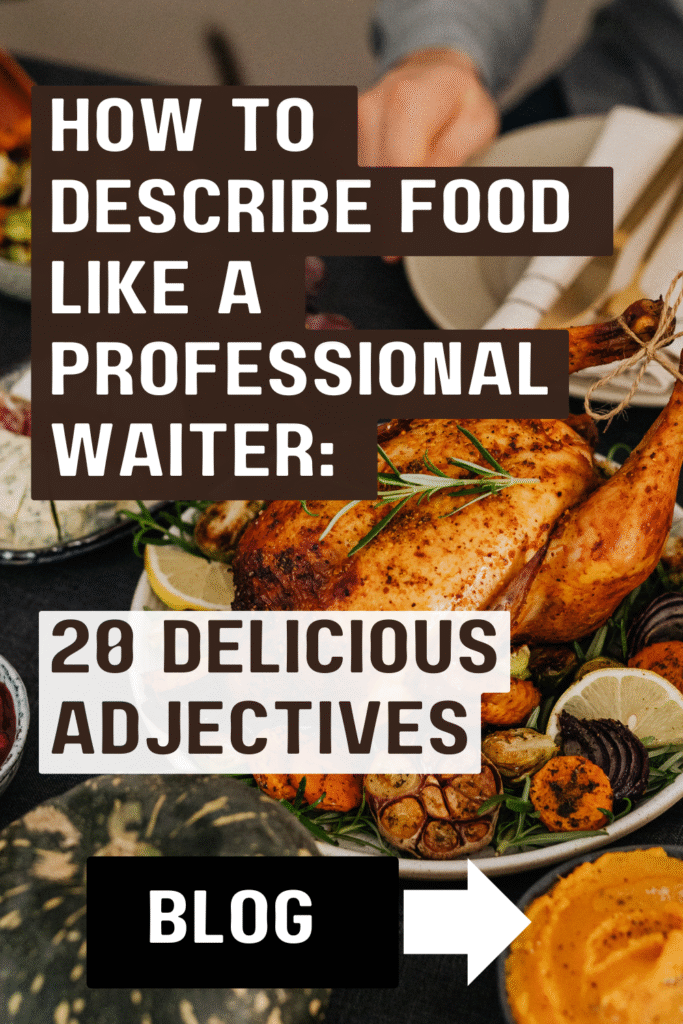
These 20 food adjectives help you describe any dish like a professional waiter. When a guest asks “How’s the salmon?”, “It’s good” tells them nothing.
By the end of this post, you’ll have 20 words, each one in a sentence you can say tonight. Tap 🔊 to hear each one.
Want to practise this with video? See the English for Waiters course →
The two-word rule: taste + texture
“Delicious” is the word every learner uses. But every dish on the menu is delicious. So it gives the guest no information.
Try this instead: one taste word + one texture word. “It’s rich and creamy.” “It’s tangy and crispy.”
Two words paint a picture. The guest can almost taste it, and that helps them choose.
Taste adjectives
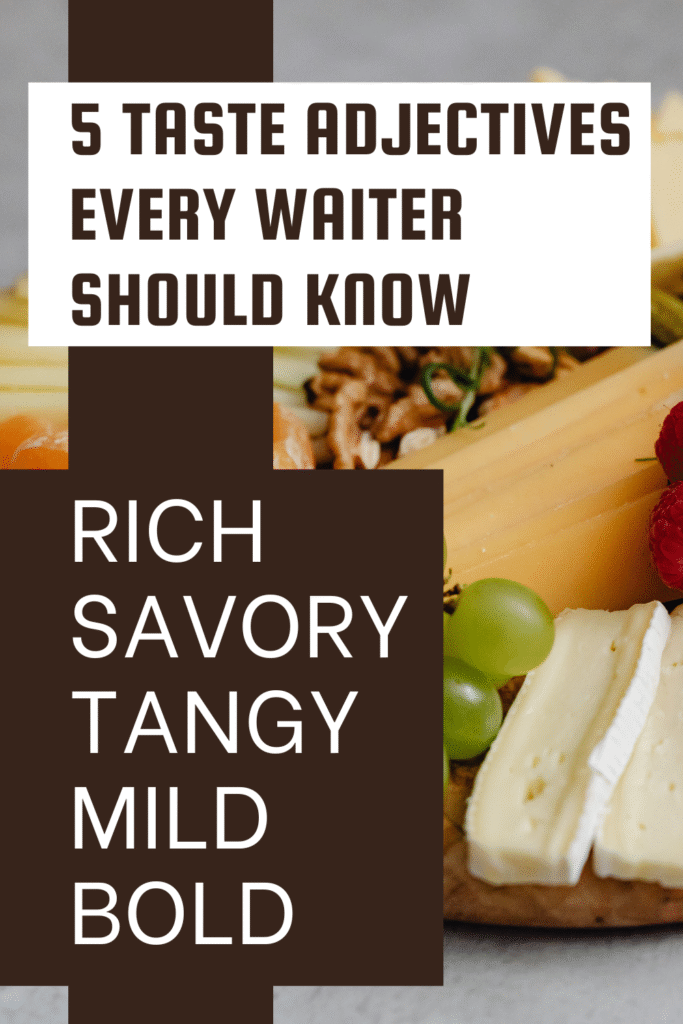
“The carbonara is very rich. It’s made with cream and parmesan.”
Rich = full of flavor, often creamy or buttery.
“The lamb is slow-cooked with savory herbs.”
Savory = salty or full of flavor, not sweet.
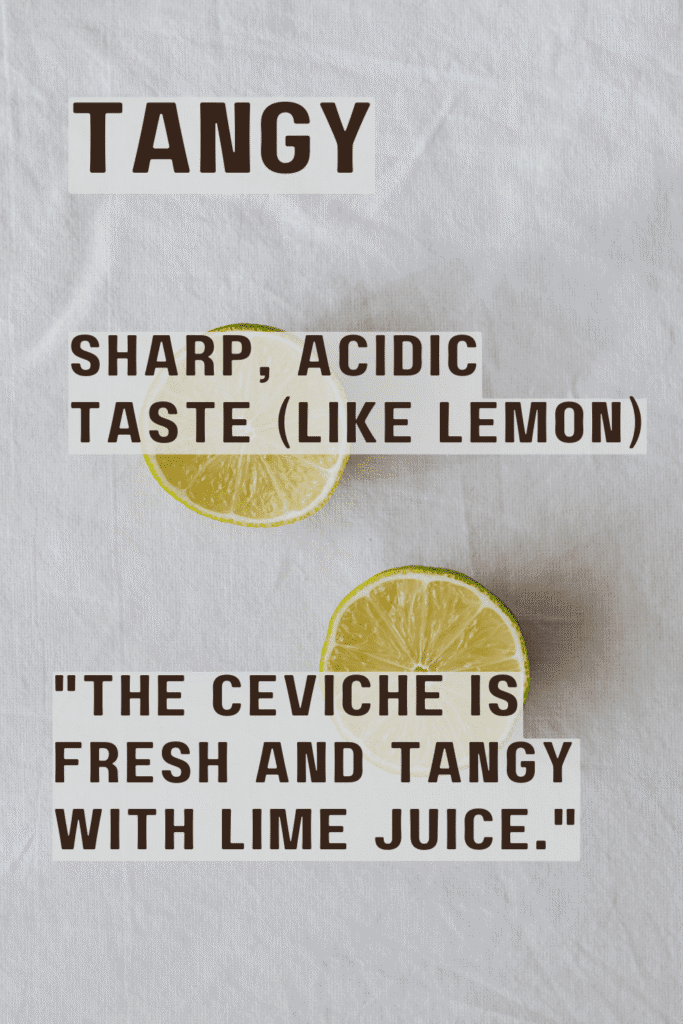
“The ceviche is fresh and tangy, with lots of lime.”
Tangy = a little sour, like lemon or vinegar.
“The yellow curry is quite mild, so it’s not very spicy.”
Mild = gentle, not strong or hot.
“Our espresso is bold and strong.”
Bold = a big, strong flavor.
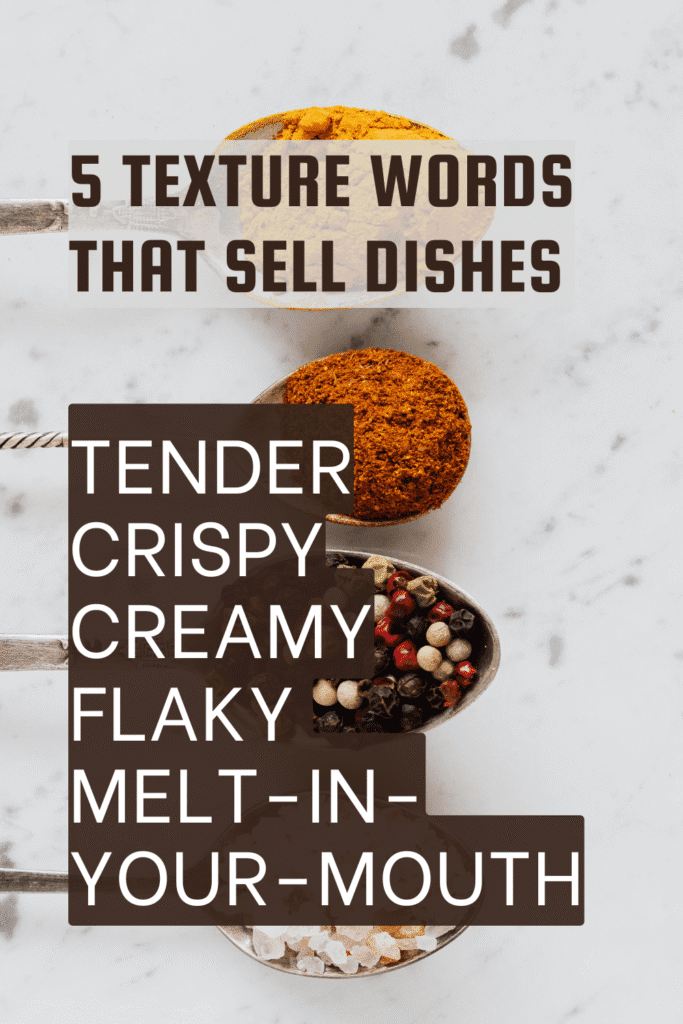
Texture adjectives
“The steak is really tender and juicy.”
Tender = soft and easy to cut.
“The wings are crispy outside and juicy inside.”
Crispy = hard and crunchy on the outside.
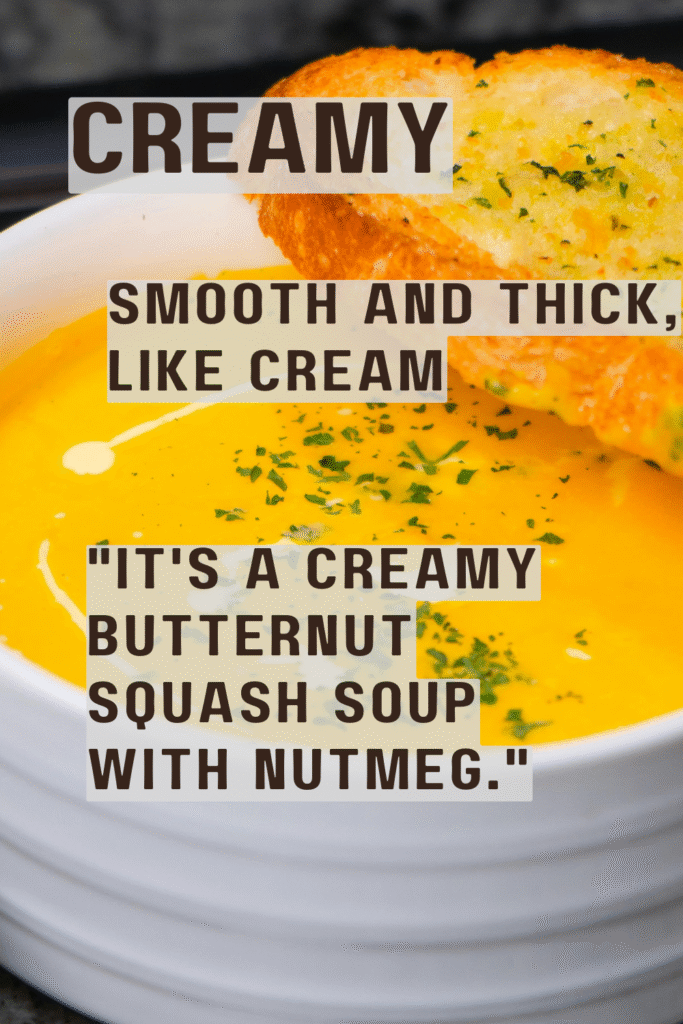
“It’s a creamy butternut squash soup.”
Creamy = smooth and thick, like cream.
“The sea bass is light and flaky.”
Flaky = breaks into soft layers. Use it for fish or pastry.
“The beef is slow-cooked, so it’s melt-in-your-mouth tender.”
Melt-in-your-mouth = so soft you hardly need to chew.
Words for how food looks
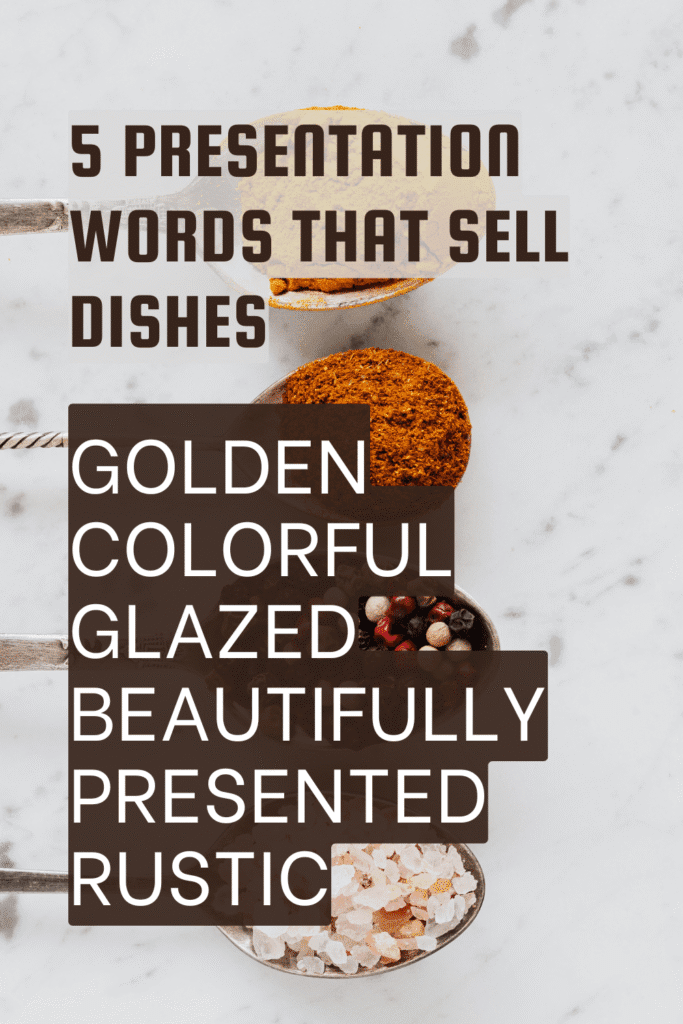
“It comes with golden roast potatoes.”
Golden = yellow-brown from cooking.
“The Buddha bowl is very colorful, with lots of vegetables.”
Colorful = with many bright colors.
“The salmon is glazed with a sweet teriyaki sauce.”
Glazed = with a shiny, often sweet coating.
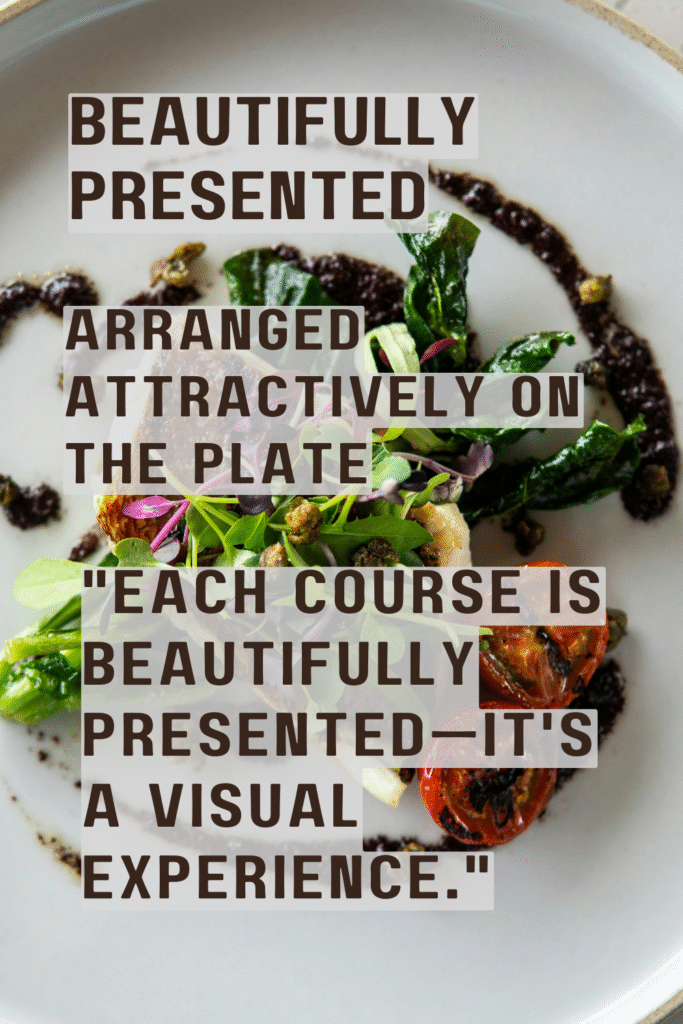
“Every course is beautifully presented.”
Beautifully presented = it looks great on the plate.
“It’s a rustic Italian dish, simple and homemade.”
Rustic = simple, traditional, home-style.
Temperature and freshness
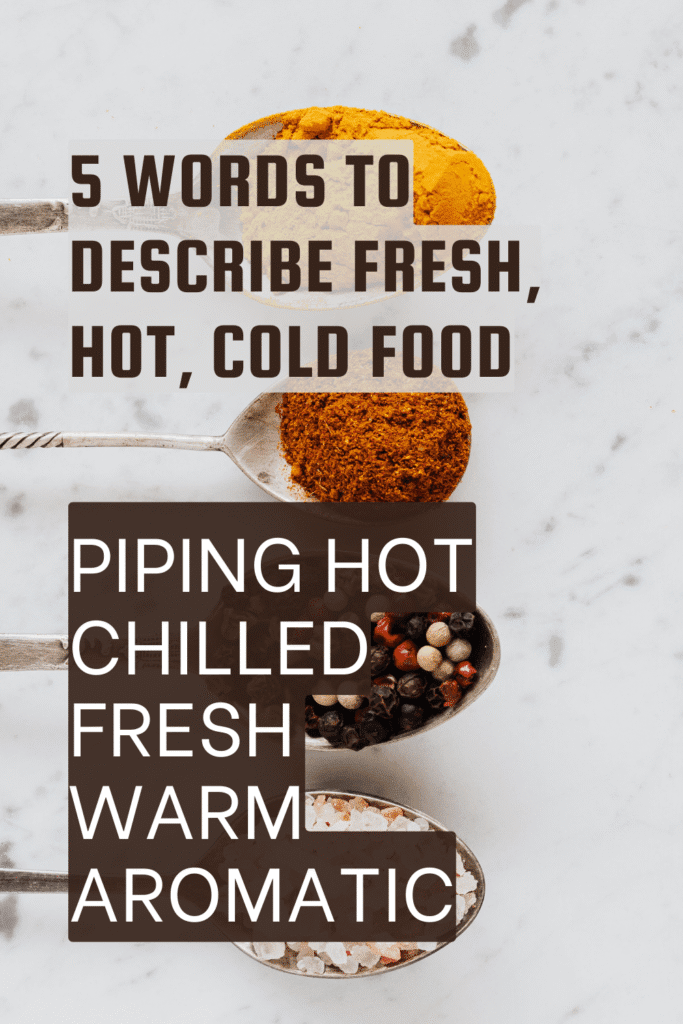
“Careful, the plate is piping hot.”
Piping hot = very hot, with steam.
“The gazpacho is served chilled.”
Chilled = cold, in a good way.
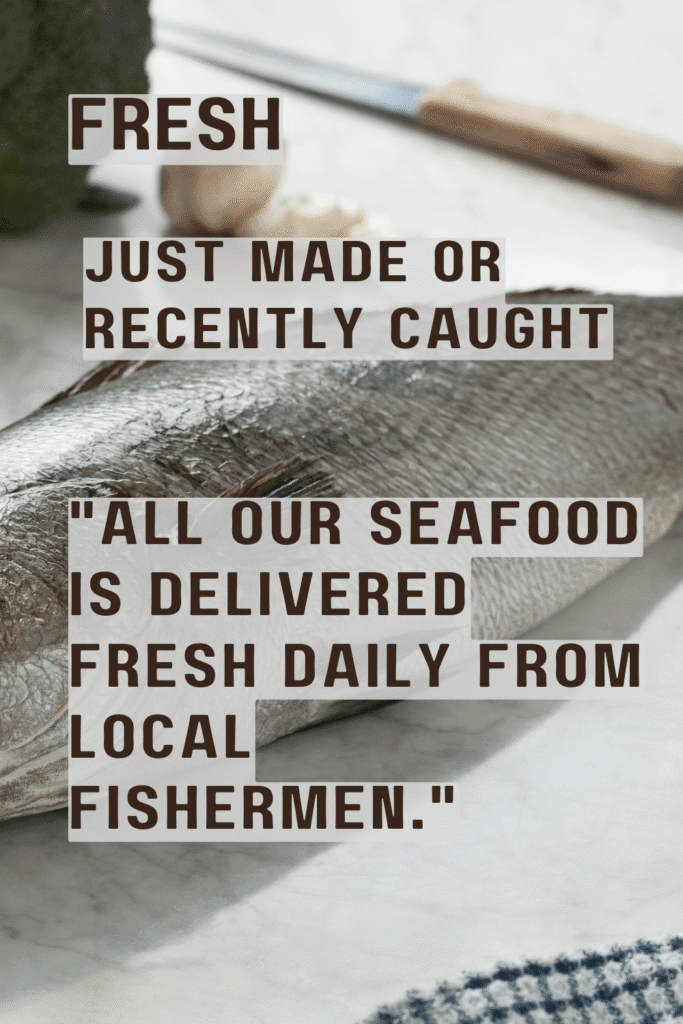
“The salad is made fresh every day.”
Fresh = just made, picked or caught.
“The brownie is served warm with ice cream.”
Warm = a little hot, not very hot.
“The chicken is roasted with garlic and rosemary, so it smells amazing. It’s very aromatic.”
Aromatic = it has a strong, nice smell.
Save this card and look at it before your next shift. On Pinterest? Pin it so you can find it fast.

English for waiters: food adjectives in a real dialogue
Guest: What’s good tonight?
Waiter: Are you in the mood for something light or something rich?
Guest: Something rich, I think.
Waiter: The beef is slow-cooked, so it’s melt-in-your-mouth tender.
Guest: And the fish?
Waiter: The sea bass is lighter. It’s flaky, with a tangy lemon sauce.
Guest: Is the beef spicy?
Waiter: No, it’s quite mild. It comes with golden roast potatoes.
Guest: Perfect. I’ll have the beef.
Waiter: Great choice. It comes out piping hot, so be careful with the plate.
See it? Every answer uses a taste or texture word. No “good”, no “nice”.
Learn 100+ phrases like these.
Short video lessons for waiters. Self-paced. $19.99, one payment.
Get the course →
Common mistakes
These are very common, and very easy to fix.
Quick quiz
1. Which description helps the guest most?
Taste and texture words give real information.
2. A dish is a little spicy. What do you say?
“A little kick” = a little spicy. Be honest, not scary.
3. We usually use “flaky” for…
Flaky food breaks into soft layers, like fish or pastry.
FAQ
What words can waiters use to describe food?
Use one taste word (rich, tangy, mild) and one texture word (crispy, tender, creamy). For example: “It’s rich and creamy.”
What does “savory” mean?
Salty or full of flavor, not sweet. Meat, cheese and herbs are savory. In the UK, it’s spelled “savoury”.
How do I describe a dish I haven’t tried?
Say what’s in it and how it’s cooked. Then add: “I haven’t tried it yet, but guests love it.”

Related guides
- How to describe dishes in English
- How to recommend a dish: 12 easy phrases
- How to describe main courses, sides and cooking methods
Ready to Go Further?
Ready to Master Restaurant English?
These free articles and scenarios are a great start, but if you want a complete, structured system for learning restaurant English, consider our full course.
English for Waiters includes:
✅ 22+ video lessons covering every restaurant situation
✅ Real restaurant scenarios with native pronunciation
✅ Interactive pronunciation practice
✅ Downloadable phrase guides
✅ Lifetime access with free updates