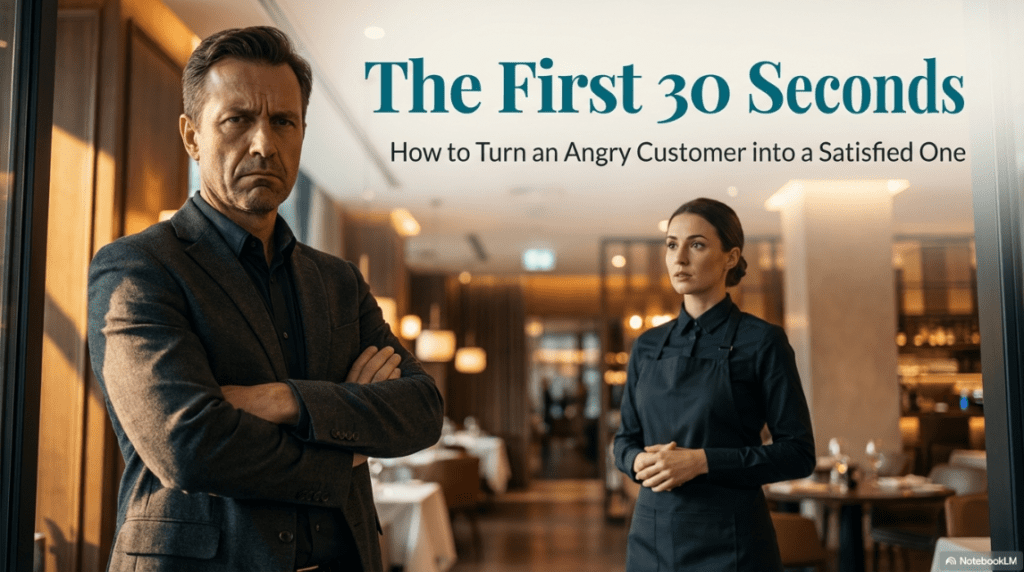
You see them the moment they walk in. Arms crossed. Frowning. Walking fast toward the host stand. Your stomach drops. This customer is already upset, and you haven’t even said hello yet.
This is one of the most stressful situations for any waiter or waitress. But knowing exactly what to say can turn an angry customer into a satisfied one. The first 30 seconds are critical.
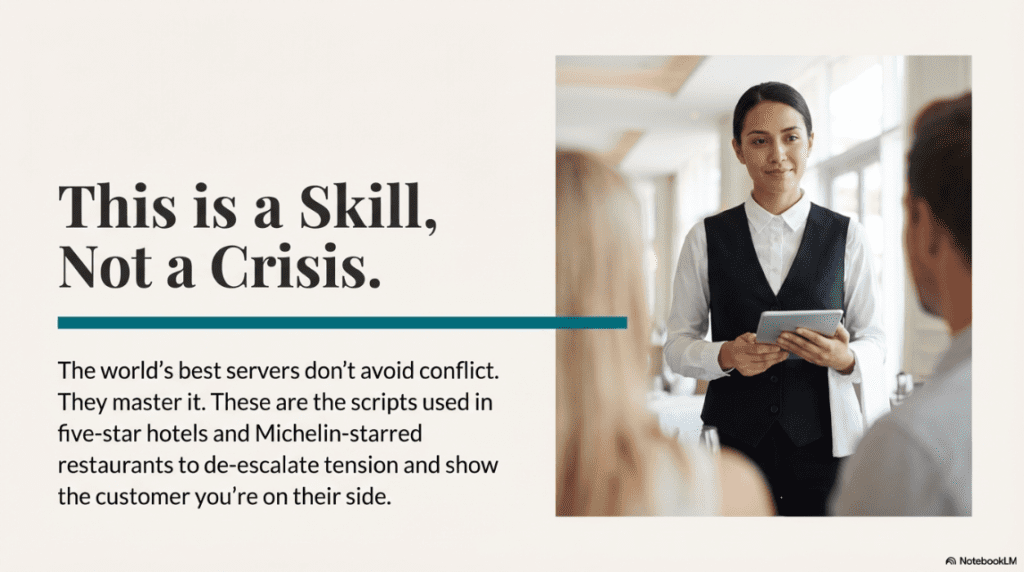
In this real restaurant scenario, you’ll learn the professional phrases that de-escalate tension and show the customer you’re on their side. These are the same scripts used in five-star hotels and Michelin-starred restaurants around the world.
Listen to this complete guide as a podcast
The Situation
Time: 7:00 PM, Friday evening – peak service
Location: Restaurant entrance, host stand area
The Problem: A customer arrives claiming they have a 7pm reservation, but the system shows 8pm. They’re frustrated and speaking loudly. Other guests are watching.
Your Goal: Acknowledge the problem, show immediate action, and find a solution while keeping the customer calm.

The Complete Dialogue
Customer: walks in quickly, looking annoyed “I have a reservation for 7 o’clock. Table for four. Where is it?”
Server: “Good evening! Let me check that for you right away. May I have the name on the reservation, please?”
Customer: “It’s Roberts. R-O-B-E-R-T-S. I called three days ago and specifically said 7pm.”
Server: “Thank you, Mr. Roberts. I’m checking our system now.” types and looks at screen “I do see your reservation here, and I sincerely apologize – it’s showing for 8pm in our system.”
Customer: voice rising “That’s not what I booked! I said 7 o’clock. This is ridiculous. We drove 30 minutes to get here on time.”
Server: “I completely understand your frustration, and I’m so sorry for this confusion. You’re absolutely right to be upset. Let me fix this for you immediately.”
Customer: “How long is the wait? My wife is starving, and we have theatre tickets at 9pm.”
Server: “I appreciate you telling me about your time constraint. Let me speak with my manager right now to see what we can do. Please, have a seat here for just one moment.” gestures to waiting area
Customer: sits, still frustrated “Fine. But this is really poor service.”
Server: returns within 2 minutes with manager “Mr. Roberts, this is Sarah, our restaurant manager. Sarah, this is Mr. Roberts and his party.”
Manager: “Mr. Roberts, I sincerely apologize for the mix-up with your reservation. I’ve just checked, and I can seat you immediately at a very nice table by the window.”
Customer: slightly calmer “You can seat us now?”
Server: “Yes, absolutely. And because of this inconvenience, we’d like to offer you a complimentary bottle of house wine with your meal.”
Customer: relaxing “Well… okay. Thank you for sorting this out.”
Server: “Of course. It’s our pleasure. Right this way, please. And again, I’m very sorry for the confusion. We’ll make sure you have a wonderful dinner and plenty of time before your theatre show.”
Customer: smiling slightly “Thank you. I appreciate you taking care of this.”
Server: “You’re very welcome, Mr. Roberts. Enjoy your evening with us.”
Key Phrases Breakdown
1. “Let me check that for you right away”
Why this works: The phrase “right away” shows immediate action. You’re not making excuses or defending the restaurant. You’re solving their problem NOW.
Tone tip: Say this with energy and urgency in your voice. Show that their concern is your top priority.
Alternative phrases:
- “I’ll look into this immediately”
- “Let me find this for you straight away”

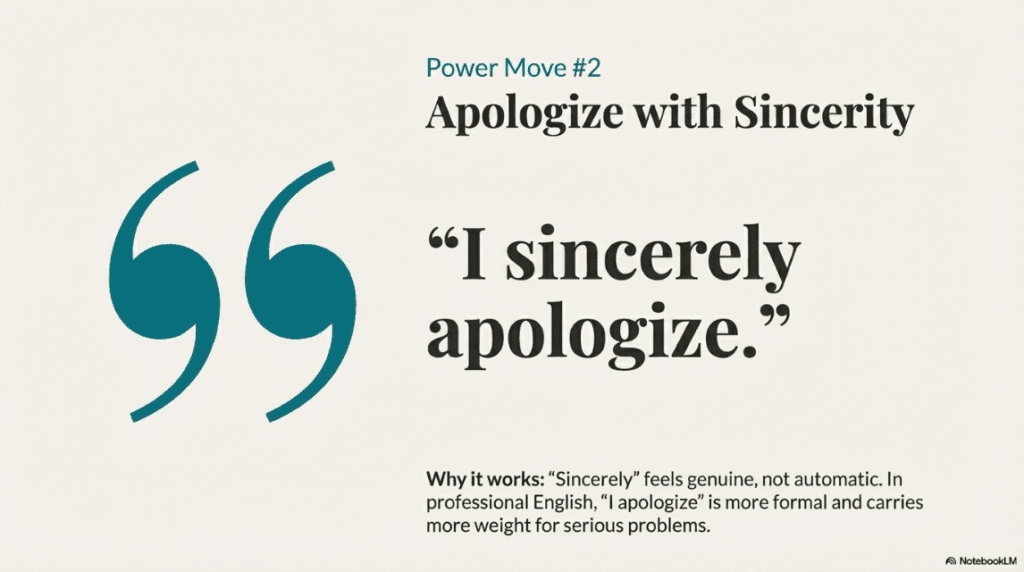
2. “I sincerely apologize”
Why this works: “Sincerely” makes the apology feel genuine, not automatic. It’s stronger than just “sorry.”
Cultural note: In professional English, “I apologize” is more formal than “I’m sorry.” Use “apologize” for serious problems, “sorry” for small issues.
When to use it: Use this phrase as soon as you identify there IS a problem. Don’t wait. Apologize early.

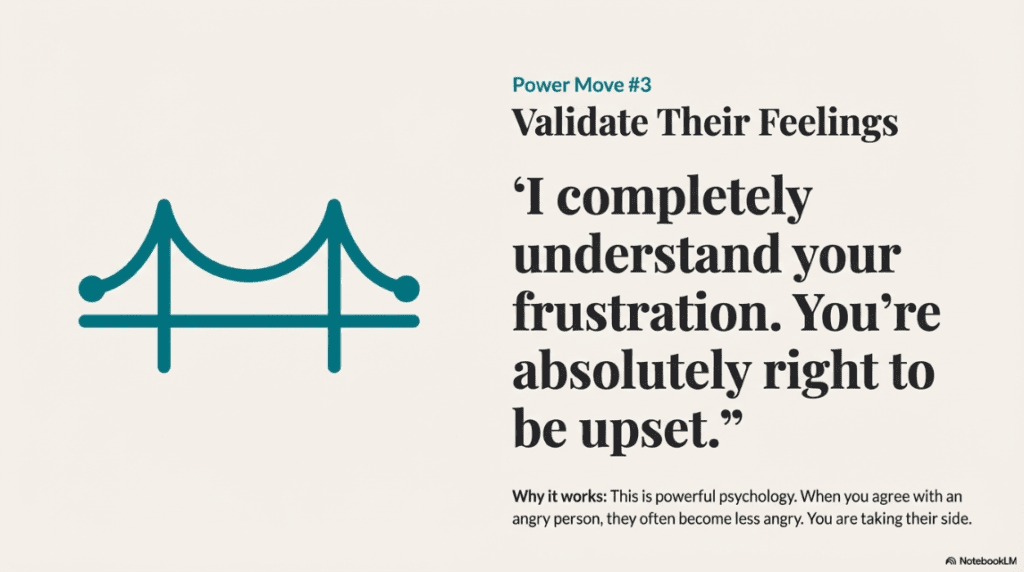
3. “I completely understand your frustration”
Why this works: You’re validating their feelings. You’re not arguing or defending. You’re showing empathy first.
Body language: Nod your head while saying this. Make eye contact. Show you’re listening.
What NOT to say:
- ❌ “Calm down” (makes them angrier)
- ❌ “It’s not a big deal” (dismissive)
- ❌ “That’s not my fault” (defensive)
4. “You’re absolutely right to be upset”
Why this works: This is powerful psychology. When you agree with an angry person, they often become LESS angry. You’re taking their side against the problem.
Important: Only use this when the customer IS right. If they’re wrong, use “I understand why you’re frustrated” instead.

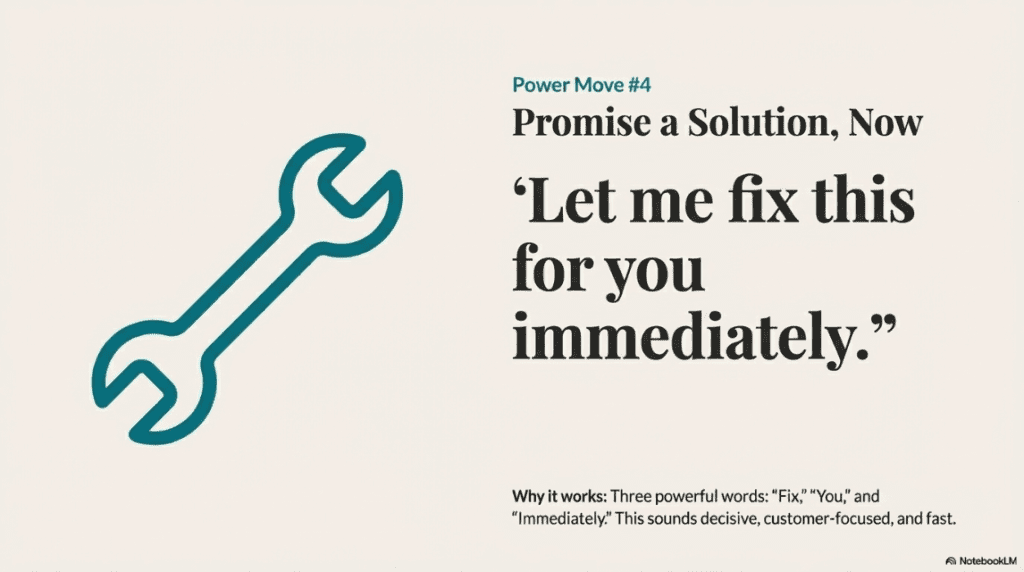
5. “Let me fix this for you immediately”
Why this works: Three powerful words: “fix,” “you,” and “immediately.” You’re action-oriented, customer-focused, and fast.
Compare to weak alternatives:
- ❌ “I’ll see what I can do” (sounds uncertain)
- ❌ “Maybe we can sort something” (sounds uncommitted)
- ✅ “I will fix this now” (sounds decisive)
6. “Please have a seat here for just one moment”
Why this works: You’re giving them a physical action (sitting) which helps calm emotions. “Just one moment” sets a short time expectation.
Gesture: Point to a comfortable seat. Don’t leave them standing at the door where other guests can hear the complaint.
7. “We’d like to offer you a complimentary…”
Why this works: Compensation shows you value them. It turns their bad experience into something positive they’ll remember.
What to offer: Appetizer, drink, or discount. Check your manager’s guidelines first.
Language note: “Complimentary” sounds more professional than “free.”
Prefer video? Watch it here.

Common Mistakes to Avoid
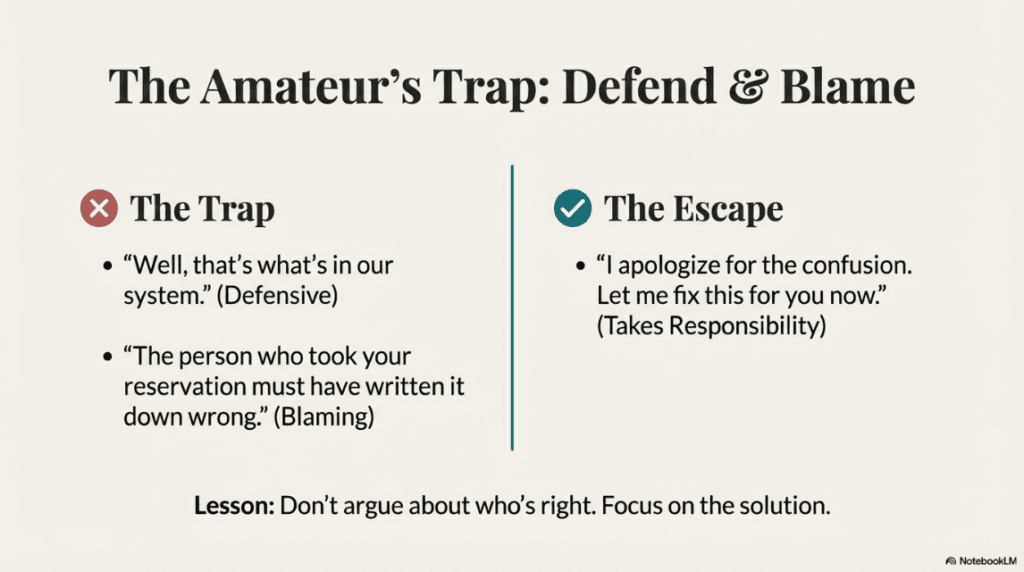
❌ Mistake 1: Getting Defensive
Wrong: “Well, that’s what’s in our system, so that’s what you must have said.”
Why it’s wrong: You’re arguing with the customer. Even if you’re right, you lose. The customer will remember feeling attacked.
Right: “I see 8pm in our system, but let’s focus on getting you seated now.”
Lesson: Don’t argue about who’s right. Focus on the solution.
❌ Mistake 2: Blaming Others
Wrong: “The person who took your reservation must have written it down wrong.”
Why it’s wrong: The customer doesn’t care whose fault it is. They want it fixed. Blaming your colleague also looks unprofessional.
Right: “I apologize for the confusion. Let me fix this for you now.”
Lesson: Take responsibility as a team. Fix first, investigate later.
❌ Mistake 3: Over-Explaining
Wrong: “Well, sometimes our computer system has this bug where if someone books online and then calls to change it, the original time stays in the system but the new time goes to a different place, and…”
Why it’s wrong: The customer doesn’t care about your technical problems. Long explanations sound like excuses.
Right: “I apologize for the mix-up. I’m fixing it right now.”
Lesson: Apologize briefly, then ACT. Don’t give them your life story.
❌ Mistake 4: Leaving Them Waiting Without Updates
Wrong: Walking away for 5 minutes while they stand there, not knowing what’s happening.
Why it’s wrong: Silence creates anxiety. They imagine you’ve forgotten them or nothing is being done.
Right: “I’ll be back in two minutes with a solution” OR “I’m speaking with my manager now – thank you for your patience.”
Lesson: Tell them what you’re doing and how long it will take.
❌ Mistake 5: Weak Body Language
Wrong: Slouching, avoiding eye contact, crossed arms, sighing, looking annoyed.
Why it’s wrong: Your body language speaks louder than your words. If you look irritated, they’ll get MORE angry.
Right: Stand up straight, make eye contact, open body posture, calm facial expression.
Lesson: Control your body language even when stressed. Professional servers master this skill according to research on professional communication in hospitality.
Practice This Scenario

Step 1: Read Out Loud
Read the full dialogue above three times. Pay attention to the polite phrases and calm tone.
Step 2: Record Yourself
Use your phone to record yourself speaking the server’s lines. Listen back. Do you sound calm and professional?
Step 3: Practice with a Friend
Ask someone to play the angry customer. Practice staying calm when they raise their voice.
Step 4: Memorize Key Phrases
You don’t need to memorize the whole script. Memorize these five phrases:
- “Let me check that for you right away”
- “I sincerely apologize”
- “I completely understand your frustration”
- “Let me fix this for you immediately”
- “We’d like to offer you a complimentary…”
Step 5: Use It Tonight
Next time you have an upset customer, use these phrases. You’ll be amazed how quickly the situation improves.

Why This Script Works (The Psychology)
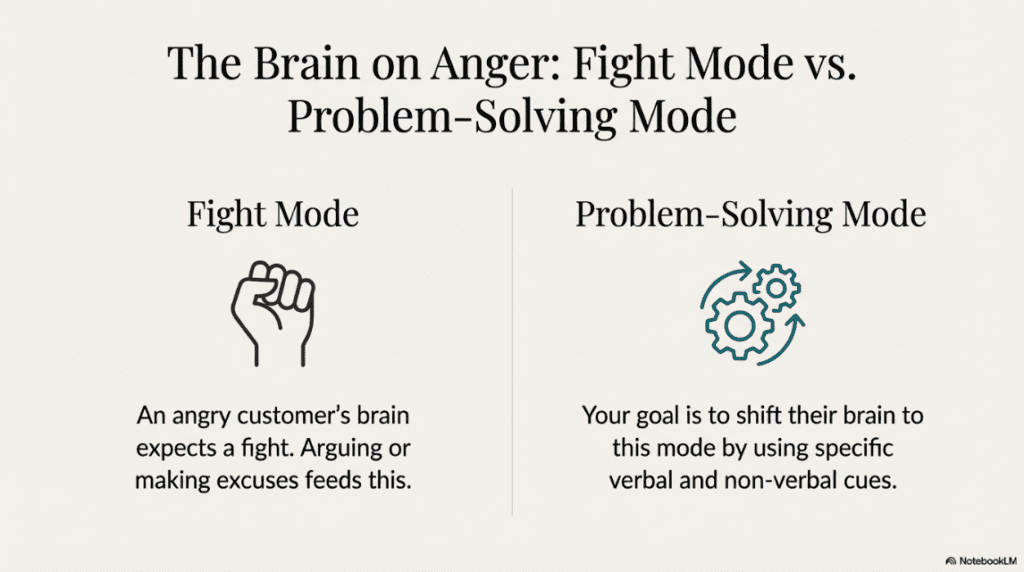
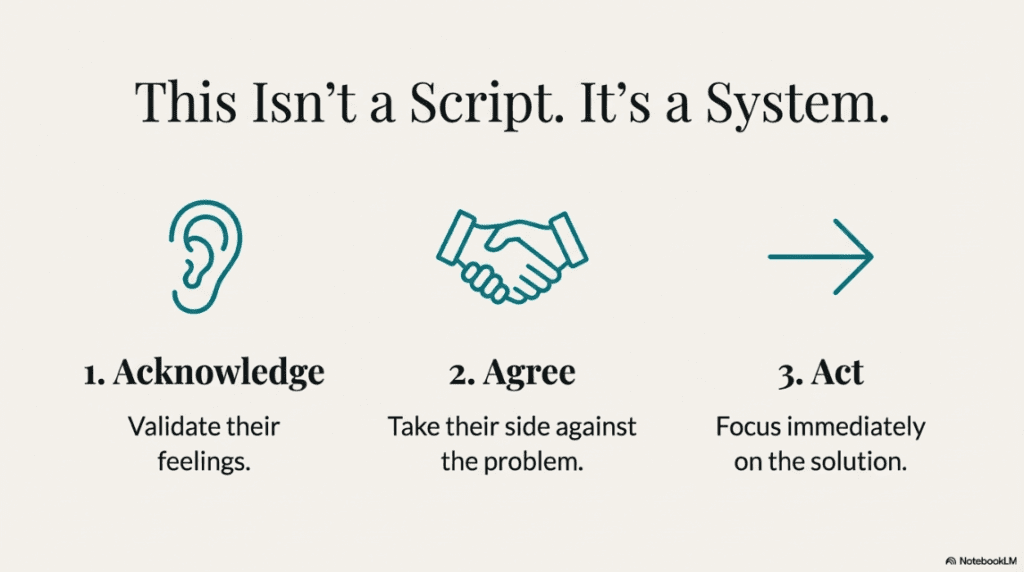
When someone is angry, their brain is in “fight mode.” They expect you to fight back. But when you:
- Acknowledge their feelings (“I understand your frustration”)
- Agree with them (“You’re right to be upset”)
- Take immediate action (“I’m fixing this right now”)
…their brain shifts from “fight mode” to “problem-solving mode.”
This technique is taught in professional conflict resolution training and is essential for anyone working in customer-facing roles.
Related Scenarios
Want more practical English guides for restaurant work? Check out these popular articles:
How to Describe Food Like a Professional Waiter – Master the exact adjectives and phrases that make menu recommendations irresistible to customers. Learn 50+ food descriptors used in professional restaurants.
20 Upselling Phrases Waiters Can Use (That Don’t Sound Pushy) – Natural upselling techniques that increase your tips by £800-£1,000 per month without making customers feel pressured.
10 Common Mistakes Waiters Make in English (And How to Fix Them) – Small English errors cost servers hundreds in tips every month. Discover the most common mistakes and exactly how to avoid them.
Free Learning Resources for Hospitality Workers – Curated list of the best free English learning websites, hospitality training programs, and professional development resources for restaurant staff.
Master Restaurant English with Audio Training
📧 Want to hear this scenario with perfect pronunciation?
This dialogue is available as a professional audio recording where you can hear:
- Natural English pronunciation
- Appropriate tone and pacing
- Exactly how to deliver these phrases under pressure
The audio version is coming soon as part of my Restaurant English Audio Scenarios collection. Get notified when it launches:
Ready to Handle Any Difficult Customer?
These free articles and scenarios are a great start, but if you want a complete, structured system for learning restaurant English, consider our full course.

English for Waiters includes:
✅ 22+ video lessons covering every restaurant situation
✅ Real restaurant scenarios with native pronunciation
✅ Interactive pronunciation practice
✅ Downloadable phrase guides
✅ Lifetime access with free updates

View English for Waiters Course →
Not ready for the full course yet? Start with our free learning resources or read more practical restaurant English guides on our blog.
💡 Bookmark this page and review it before your next shift. The first time you successfully calm an angry customer using these phrases, you’ll feel like a professional.