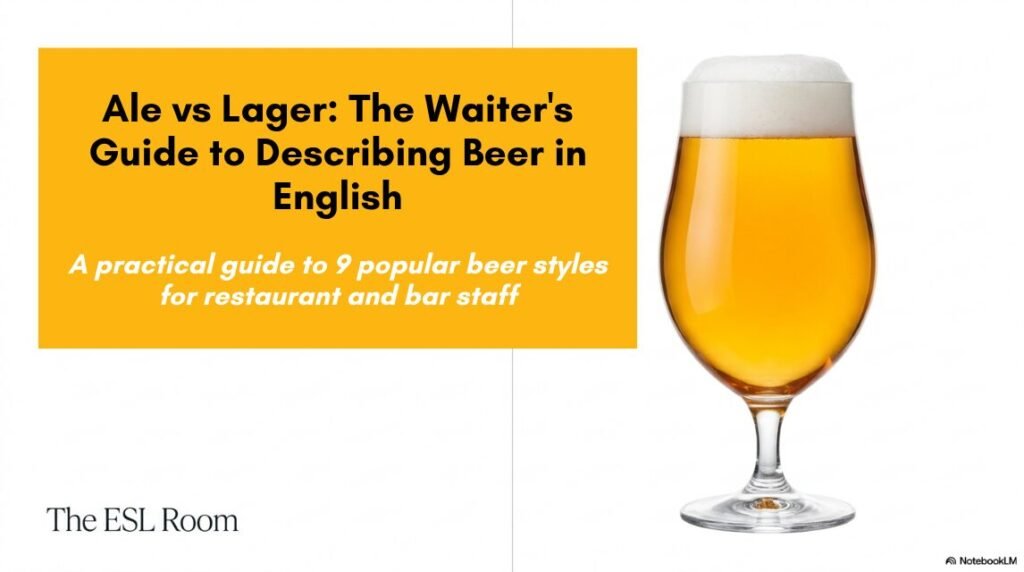
A practical guide to 9 popular beer styles for restaurant and bar staff
Introduction — Ale vs Lager: What’s the Difference?
Before we look at individual beer styles, it helps to understand the two main families that almost every beer belongs to.
Lager is brewed at cold temperatures using bottom-fermenting yeast. The result is a clean, crisp and refreshing drink. Lagers are generally lighter in colour and flavour. They are the most widely drunk beers in the world.
Ale is brewed at warmer temperatures using top-fermenting yeast. The result is a fuller, more complex flavour. Ales include a huge range of styles — from pale ales and IPAs to stouts and Belgian ales.
When a guest asks what a beer tastes like, this simple distinction is your starting point.
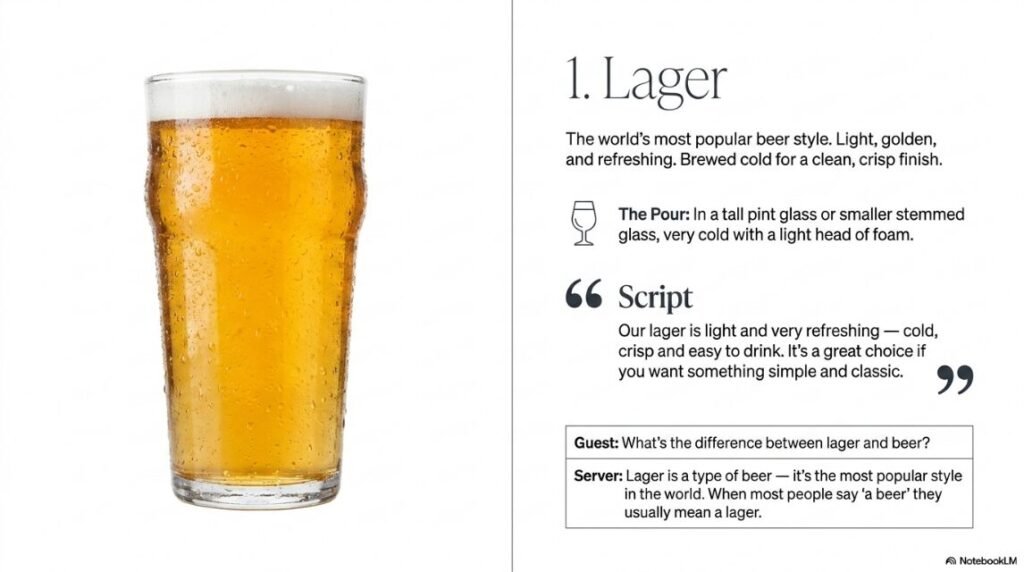
1. Lager
What it is: The world’s most popular beer style. Light, golden and refreshing. Brewed at cold temperatures for a clean, crisp finish.
How to describe it: “Lager is light, crisp and very refreshing. It’s not bitter or heavy — clean and easy to drink. Perfect with food or on its own.”
How it’s served: In a tall pint glass or a smaller stemmed glass, very cold with a light head of foam.
Ready-made phrase: “Our lager is light and very refreshing — cold, crisp and easy to drink. It’s a great choice if you want something simple and classic.”
Common guest question:
❓ “What’s the difference between lager and beer?”
✅ “Lager is a type of beer — it’s the most popular style in the world. When most people say ‘a beer’ they usually mean a lager.”
2. Pilsner
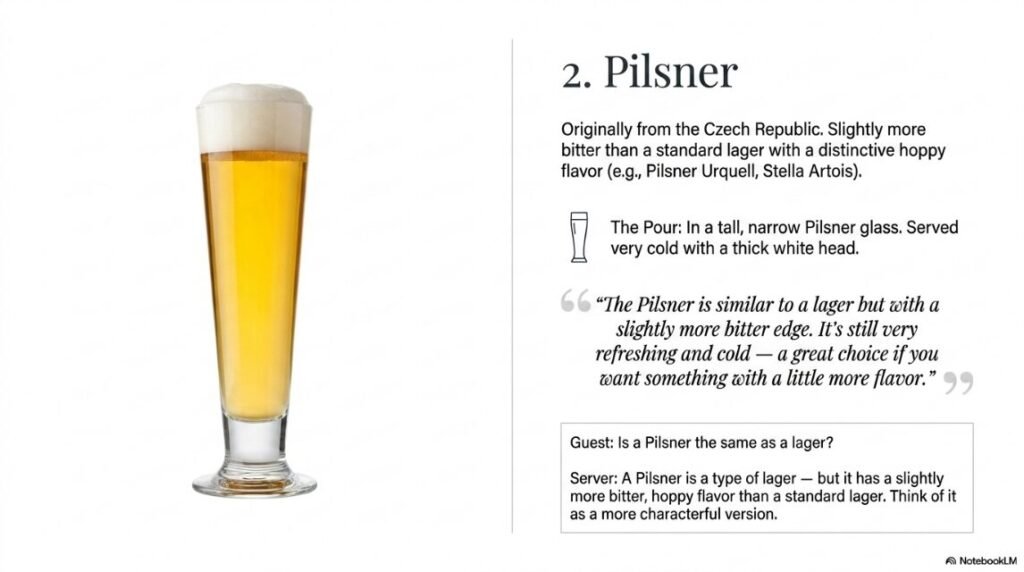
What it is: A type of lager originally from the Czech Republic. Slightly more bitter than a standard lager with a more distinctive hoppy flavour. Brands like Pilsner Urquell and Stella Artois are well known examples.
How to describe it: “A Pilsner is similar to a lager but with a slightly more bitter, hoppy flavour. It’s still light and refreshing but with a little more character.”
How it’s served: In a tall, narrow Pilsner glass. Served very cold with a thick white head.
Ready-made phrase: “The Pilsner is similar to a lager but with a slightly more bitter edge. It’s still very refreshing and cold — a great choice if you want something with a little more flavour.”
Common guest question:
❓ “Is a Pilsner the same as a lager?”
✅ “A Pilsner is a type of lager — but it has a slightly more bitter, hoppy flavour than a standard lager. Think of it as a more characterful version.”
3. IPA — India Pale Ale
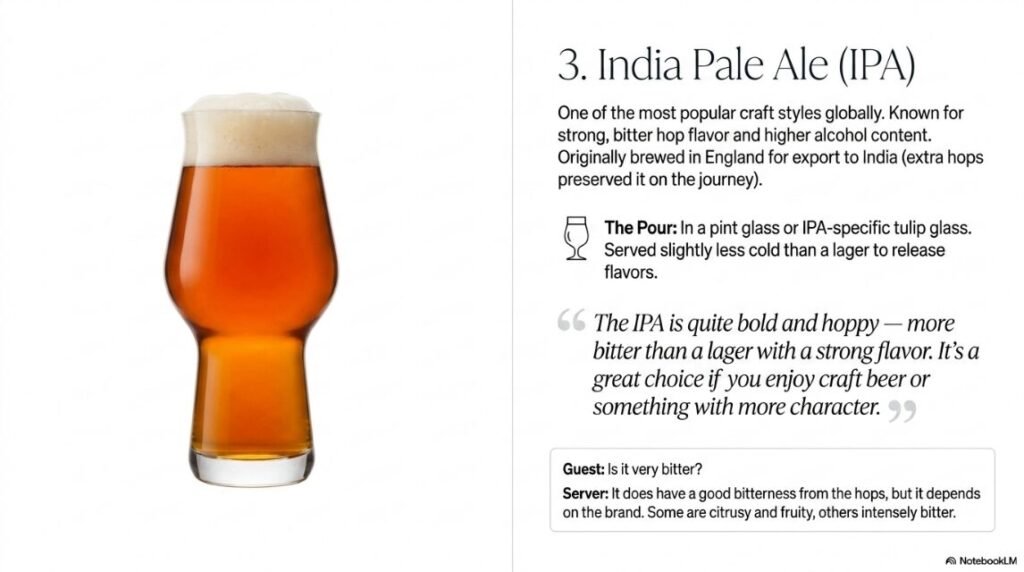
What it is: One of the most popular craft beer styles in the world. Known for its strong, bitter hop flavour and higher alcohol content. Originally brewed in England for export to India — the extra hops preserved the beer on the long journey.
How to describe it: “An IPA is quite bitter with a strong hop flavour. It can be citrusy, floral or piney depending on the brand. It’s fuller and stronger than a lager.”
How it’s served: In a pint glass or an IPA-specific tulip glass. Usually served slightly less cold than a lager to allow the flavours to come through.
Ready-made phrase: “The IPA is quite bold and hoppy — more bitter than a lager with a strong flavour. It’s a great choice if you enjoy craft beer or something with more character.”
Common guest question:
❓ “Is it very bitter?”
✅ “It does have a good bitterness from the hops but it depends on the brand. Some IPAs are more citrusy and fruity, others are more intensely bitter. I can tell you more about the specific one we have.”
4. Pale Ale
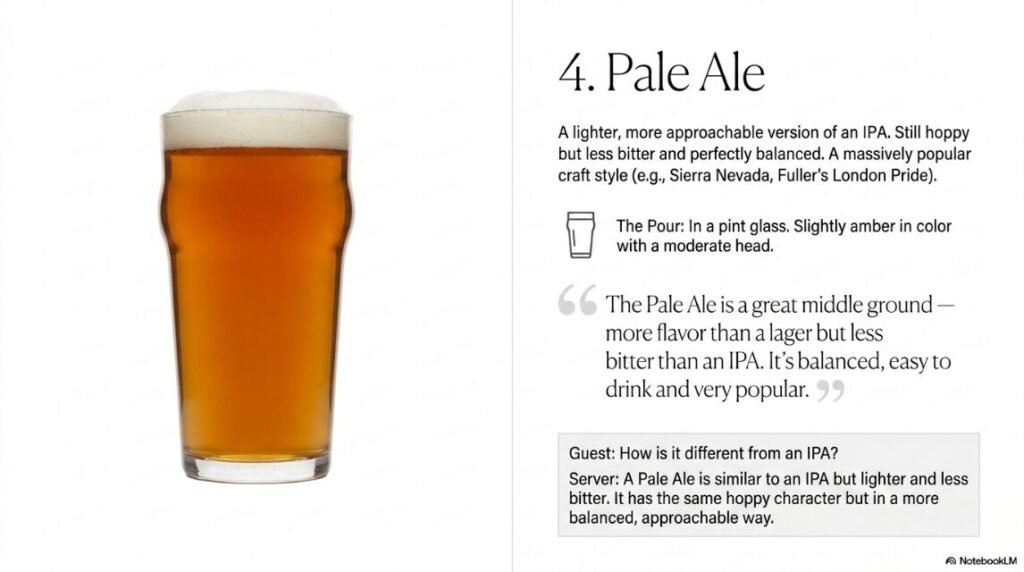
What it is: A lighter, more approachable version of an IPA. Still hoppy but less bitter and more balanced. One of the most popular styles in craft beer. Brands like Sierra Nevada and Fuller’s London Pride are well known examples.
How to describe it: “A Pale Ale is hoppy and flavourful but less bitter than an IPA. It has a good balance of malt and hops — a great middle ground between a lager and a full IPA.”
How it’s served: In a pint glass. Slightly amber in colour with a moderate head.
Ready-made phrase: “The Pale Ale is a great middle ground — more flavour than a lager but less bitter than an IPA. It’s balanced, easy to drink and very popular with craft beer fans.”
Common guest question:
❓ “How is it different from an IPA?”
✅ “A Pale Ale is similar to an IPA but lighter and less bitter. It has the same hoppy character but in a more balanced, approachable way.”
5. Wheat Beer
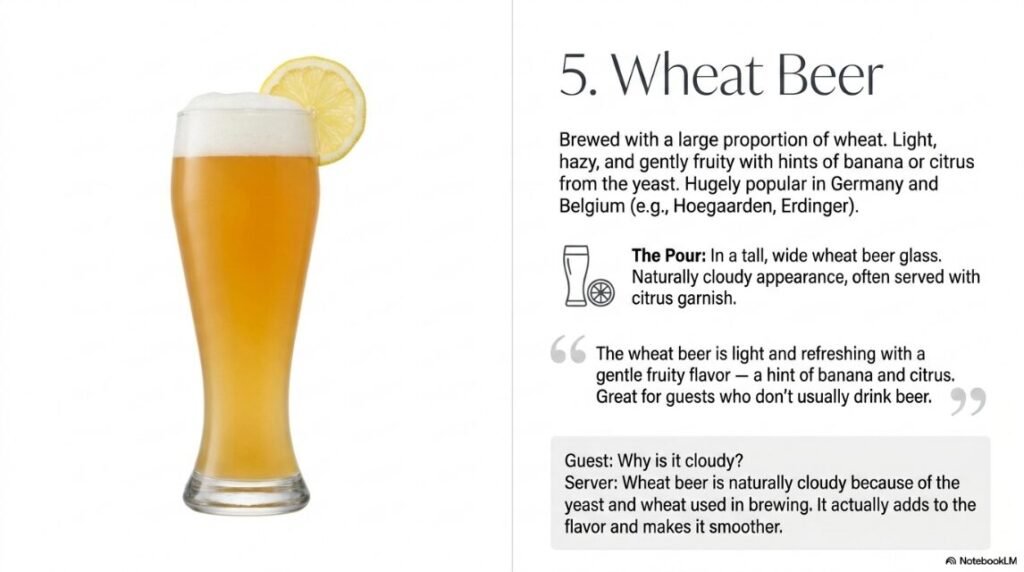
What it is: A beer brewed with a large proportion of wheat rather than barley. Light, hazy and slightly fruity. Very popular in Germany and Belgium. Brands like Hoegaarden and Erdinger are well known examples.
How to describe it: “Wheat beer is light, slightly cloudy and gently fruity. It often has a hint of banana or citrus from the yeast. It’s refreshing and smooth — less bitter than most beers.”
How it’s served: In a tall, wide wheat beer glass. Often served with a slice of lemon or orange. Naturally cloudy in appearance.
Ready-made phrase: “The wheat beer is light and refreshing with a gentle fruity flavour — a hint of banana and citrus. It’s less bitter than most beers and very smooth. Great for guests who don’t usually drink beer.”
Common guest question:
❓ “Why is it cloudy?”
✅ “Wheat beer is naturally cloudy because of the yeast and wheat used in brewing. It’s completely normal — it actually adds to the flavour and makes it smoother.”
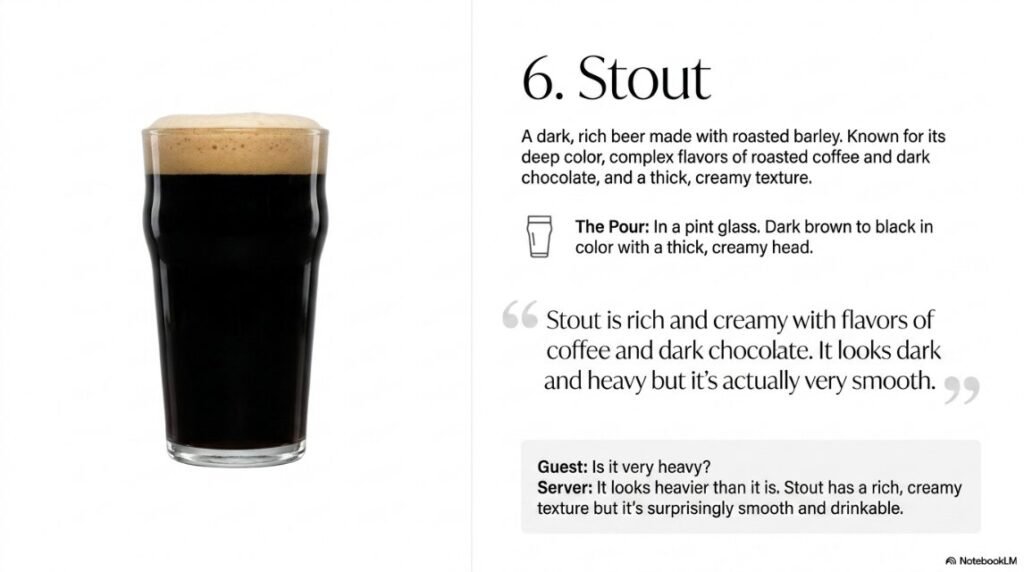
6. Stout
What it is: A dark, rich beer made with roasted barley which gives it a deep colour and a strong, complex flavour. Known for its thick, creamy texture. The most famous example is Guinness.
How to describe it: “Stout is dark, rich and full-bodied with flavours of roasted coffee and dark chocolate. It has a thick, creamy texture and a smooth, bitter finish. It looks heavy but is surprisingly balanced.”
How it’s served: In a pint glass. Dark brown to black in colour with a thick, creamy head.
Ready-made phrase: “Stout is rich and creamy with flavours of coffee and dark chocolate. It looks dark and heavy but it’s actually very smooth. A great choice for guests who enjoy bold, complex flavours.”
Common guest question:
❓ “Is it very heavy?”
✅ “It looks heavier than it is. Stout has a rich, creamy texture but it’s surprisingly smooth and drinkable. Many guests who think they won’t like it end up loving it.”
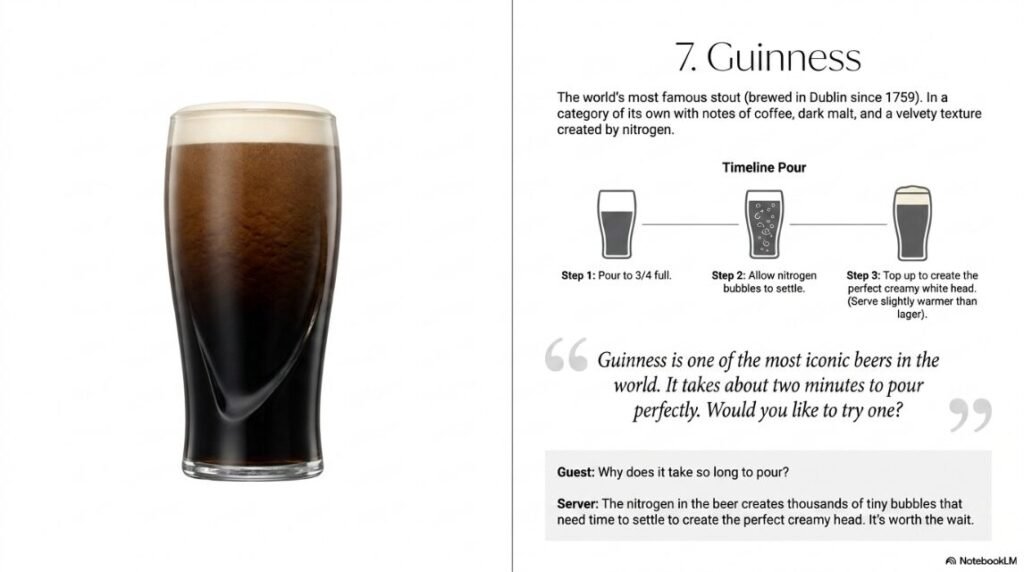
7. Guinness
What it is: The world’s most famous stout, brewed in Dublin since 1759. Guinness has a unique flavour and a distinctive two-part pour that creates its famous creamy head. It is in a category of its own.
How to describe it: “Guinness is dark, smooth and creamy with a distinctive roasted flavour. It has notes of coffee and dark malt with a slightly bitter finish. The famous creamy white head adds a smooth, velvety texture.”
How it’s served: In a Guinness pint glass. Poured in two stages — first to three quarters, allowed to settle, then topped up to create the perfect creamy head. Served at a slightly warmer temperature than lager.
Ready-made phrase: “Guinness is one of the most iconic beers in the world — dark, smooth and creamy with a rich roasted flavour. It takes about two minutes to pour perfectly. Would you like to try one?”
Common guest question:
❓ “Why does it take so long to pour?”
✅ “Guinness is poured in two stages to create the perfect creamy head. The nitrogen in the beer creates thousands of tiny bubbles that need time to settle. It’s worth the wait.”
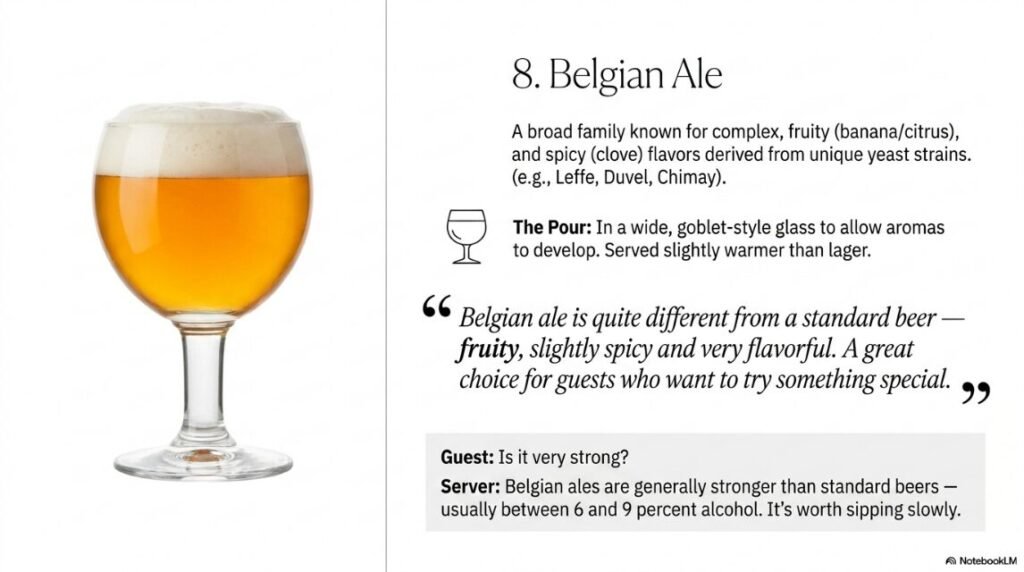
8. Belgian Ale
What it is: A broad family of ales from Belgium known for their complex, fruity and spicy flavours. Belgian ales are brewed with unique yeast strains that give them their distinctive character. Well known examples include Leffe, Duvel and Chimay.
How to describe it: “Belgian ale is fruity, slightly spicy and quite complex. It often has flavours of banana, clove and citrus from the yeast. It is usually stronger than standard beers and very flavourful.”
How it’s served: In a wide, goblet-style glass that allows the aromas to develop. Often served slightly warmer than lager to bring out the flavours.
Ready-made phrase: “Belgian ale is quite different from a standard beer — fruity, slightly spicy and very flavourful. It’s usually stronger than a lager and has a lot of character. A great choice for guests who want to try something special.”
Common guest question:
❓ “Is it very strong?”
✅ “Belgian ales are generally stronger than standard beers — usually between 6 and 9 percent alcohol. It’s worth sipping slowly and enjoying the flavour.”
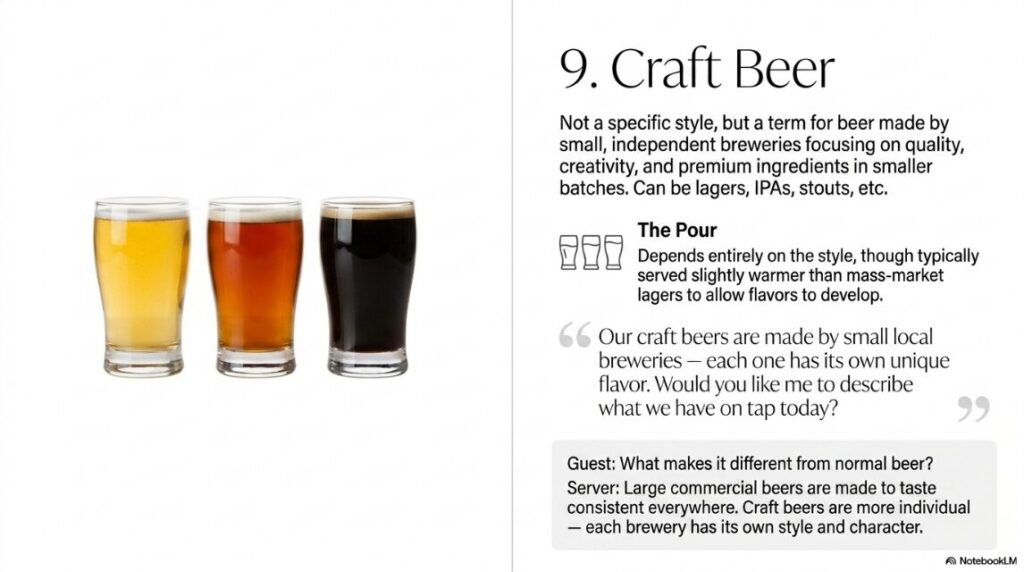
9. Craft Beer
What it is: Craft beer is not a specific style — it is a term for beer made by small, independent breweries that focus on quality, flavour and creativity. Craft beers can be any style — lager, IPA, pale ale, stout and more — but they are typically made in smaller batches with premium ingredients.
How to describe it: “Craft beer is made by small, independent breweries rather than large commercial brands. The focus is on flavour and quality. Every craft beer is different — some are hoppy, some are fruity, some are dark and rich.”
How it’s served: Depends on the style. Most craft beers are served in a pint glass or a tulip glass at slightly warmer than lager temperature to allow the flavours to develop.
Ready-made phrase: “Our craft beers are made by small local breweries — each one has its own unique flavour. Would you like me to describe what we have on tap today?”
Common guest question:
❓ “What makes it different from normal beer?”
✅ “Craft beer is made in smaller quantities with more focus on flavour and quality. Large commercial beers are made to taste consistent everywhere in the world. Craft beers are more individual — each brewery has its own style and character.”
Quick Reference — 9 Beer Styles at a Glance
| Beer | Family | Taste | Strength | Best for |
|---|---|---|---|---|
| Lager | Lager | Light, crisp, refreshing | Medium | Guests who want something simple |
| Pilsner | Lager | Light, slightly bitter, hoppy | Medium | Guests who want more flavour than lager |
| IPA | Ale | Bold, bitter, hoppy | Strong | Craft beer fans, guests who like bitter |
| Pale Ale | Ale | Balanced, hoppy, easy drinking | Medium | Middle ground between lager and IPA |
| Wheat Beer | Ale | Light, fruity, smooth | Medium | Guests who don’t usually drink beer |
| Stout | Ale | Dark, rich, coffee and chocolate | Medium | Guests who enjoy bold flavours |
| Guinness | Ale | Smooth, creamy, roasted | Medium | Guests who want something iconic |
| Belgian Ale | Ale | Fruity, spicy, complex | Strong | Guests who want something special |
| Craft Beer | Either | Varies — unique to each brewery | Varies | Guests who want to explore |
Ready to Go Further?
These phrases are a great start, but if you want a complete, structured system for learning restaurant and bar English, the full English for Waiters course covers 16 lessons across every area of service.
Use code ETSY50 for 50% off.
👉 theeslroom.com/english-for-waiters
Ready to Master Restaurant English?
These free articles and scenarios are a great start, but if you want a complete, structured system for learning restaurant English, consider our full course.

English for Waiters includes:
✅ 22+ video lessons covering every restaurant situation
✅ Real restaurant scenarios with native pronunciation
✅ Interactive pronunciation practice
✅ Downloadable phrase guides
✅ Lifetime access with free updates