Speaking to managers and coworkers is a big part of every shift. Many servers talk to their team more than to guests.
But team English is different from guest English. By the end of this post, you’ll have 14 phrases for your manager, the kitchen and your team. Tap 🔊 to hear each one.
Want to practise this with video? See the English for Waiters course →
Prefer to listen? Here’s the podcast.
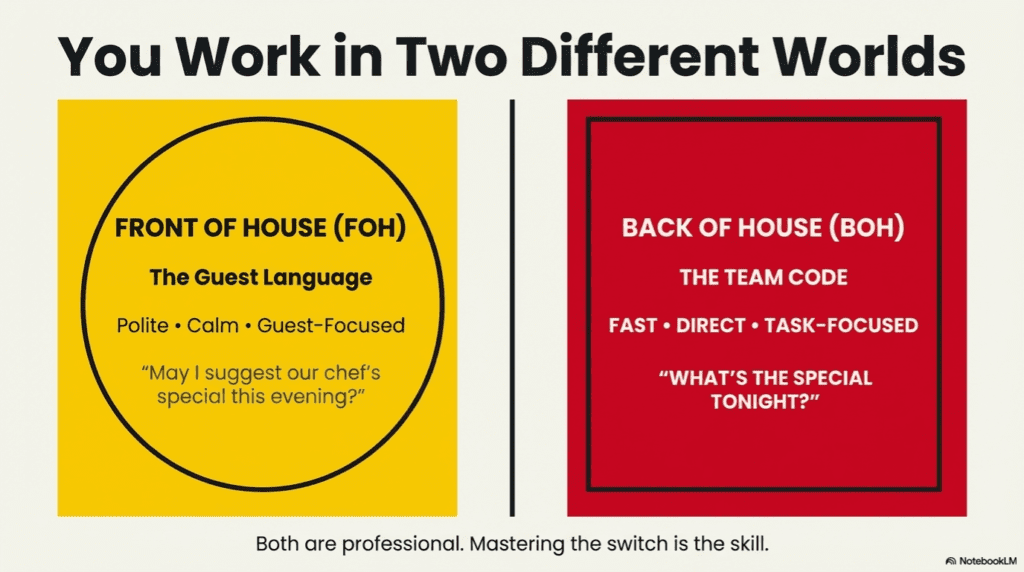
Guest English vs team English
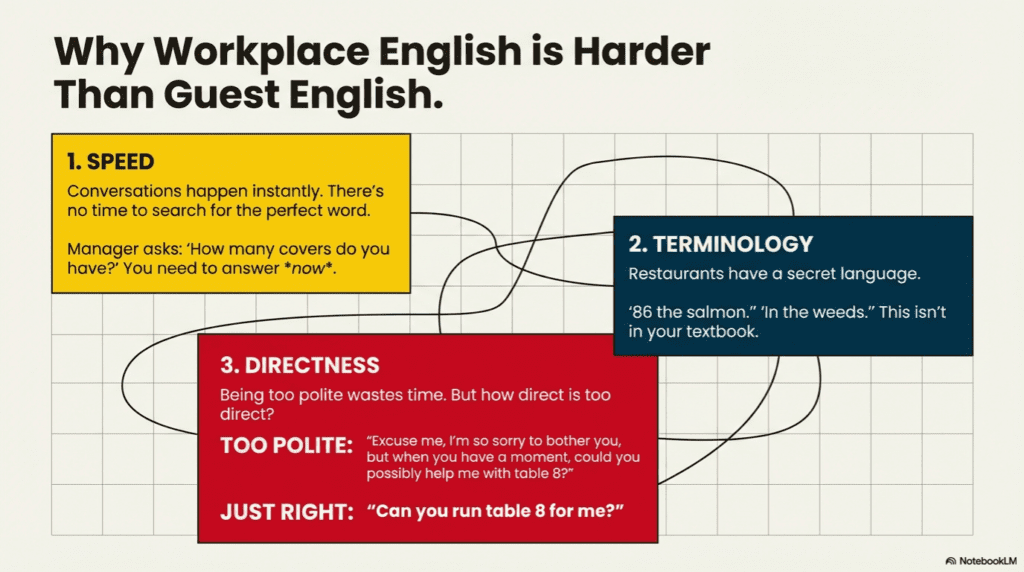
With guests, your English is long and soft: “Would you like me to bring some more bread?”
With your team, it’s short and clear: “More bread for table 6, please.”
Both are professional. But in a busy kitchen, very polite English wastes time. Look at the difference:
Too polite: “Excuse me, I’m so sorry to bother you, but could you possibly help me with table 8?”
Just right: “Can you help me with table 8, please?”
Too rude: “Table 8. Now.”
Aim for the middle every time: short, clear, with “please” and “thanks”.
Talking to your manager
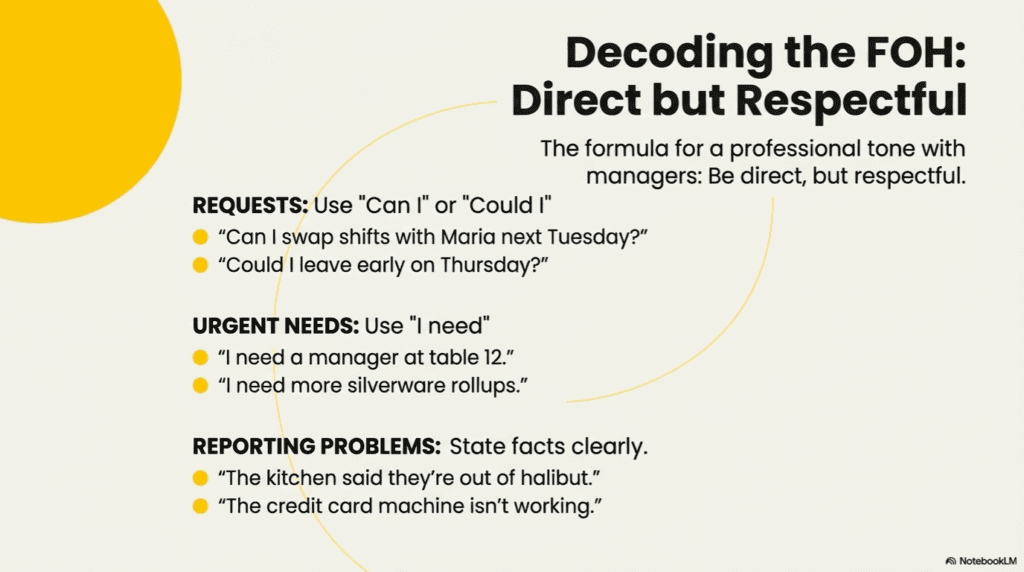
“Can I swap shifts with Maria next Tuesday?”
Swap shifts = change work days with a coworker.
“Can I take my break now?”
Use “Can I…?” for normal requests.
“I need a manager at table 12.”
Use “I need…” when it’s urgent, like an angry guest.
“My section is clean and my side work is done. Can I go?”
Side work = small jobs like refilling salt and folding napkins.
Talking to the kitchen
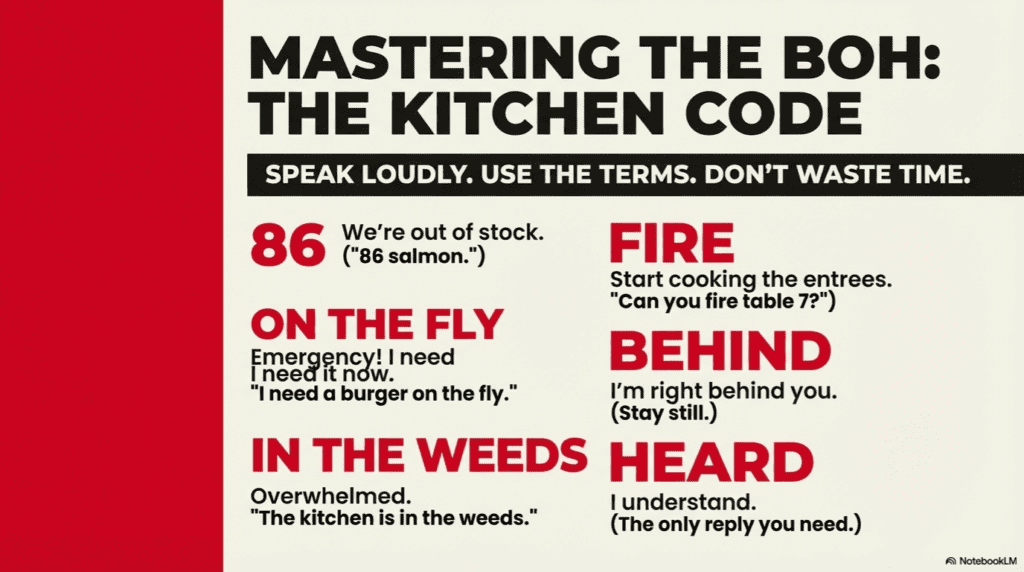
“How long on table 4?”
Ask once. Then wait. Asking again and again annoys the chef.
“Table 8: no onions on the burger, please.”
Table number first, then the request.
“Heard.”
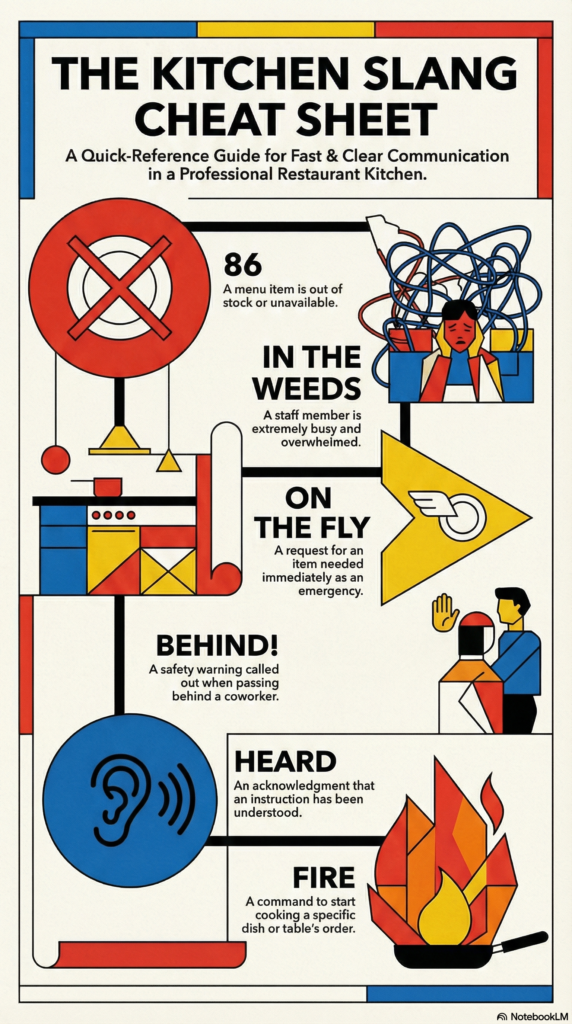
Kitchen English for “I understand”. Say it when the chef tells you something.
“Sorry, I need a burger on the fly. I forgot to ring it in.”
On the fly = as fast as possible. Use it only for real emergencies.
Talking to your team
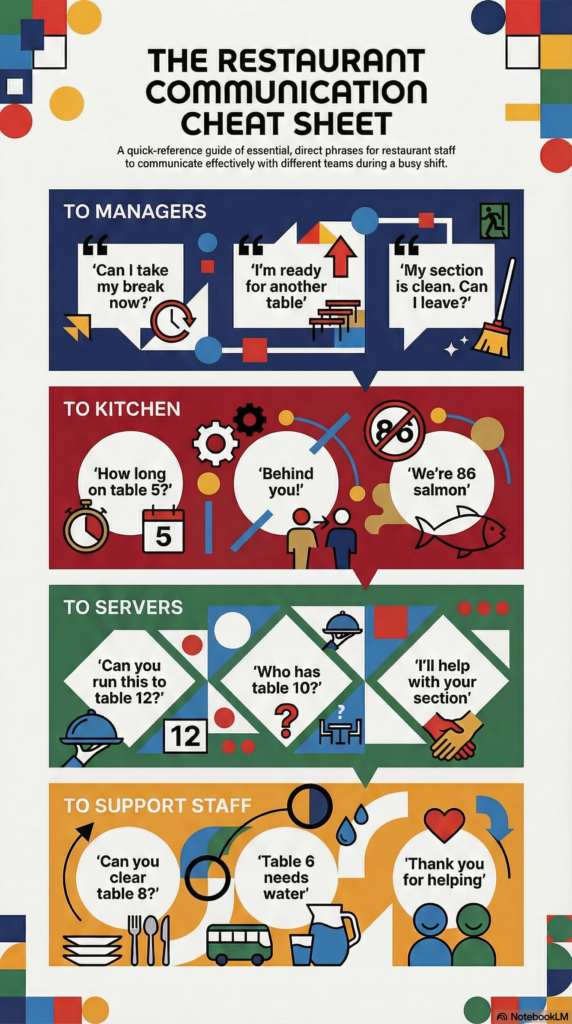
“Can you run this to table 12, please?”
Run = carry food or drinks to a table.
“Do you need me to run anything?”
Offer help when you’re free. Your team will help you back.
“Can you watch my section for two minutes?”
When you need a short break or a bathroom.
“Can you slow down seating? The kitchen is backed up.”
To the host. Backed up = has too many orders.
When you don’t understand
“Sorry, can you say that again? It’s loud in here.”
Restaurants are noisy. Asking twice is normal.
“Sorry, what does 86 mean?”
Ask about new words. You’ll hear them every shift.
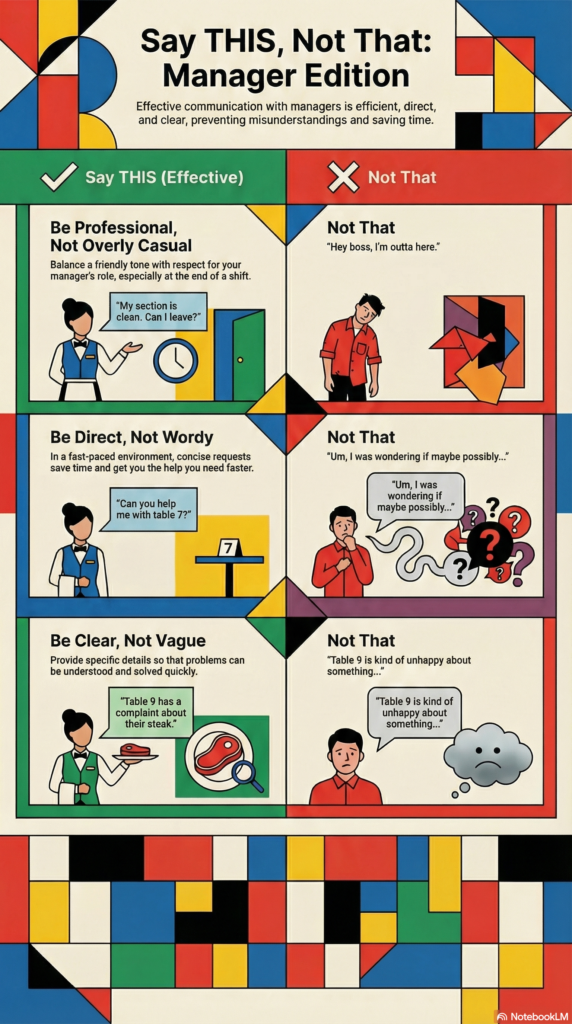
Save this card and look at it before your next shift. On Pinterest? Pin it so you can find it fast.
Speaking to managers and coworkers: a real dialogue
Manager: Can you take one more table?
Server: Can you give me five minutes? I have three tables ordering.
Manager: Sure, no rush.
Server: Chef, how long on table 4?
Chef: Two minutes. And we’re 86 the salmon.
Server: Heard. No more salmon. Thanks, chef.
Server: Okay, I’m ready for another table now.
Manager: Great. I’ll seat table 9 for you.
See it? Short and clear, but still polite. Nobody wastes time.
Learn 100+ phrases like these.
Short video lessons for waiters. Self-paced. $19.99, one payment.
Get the course →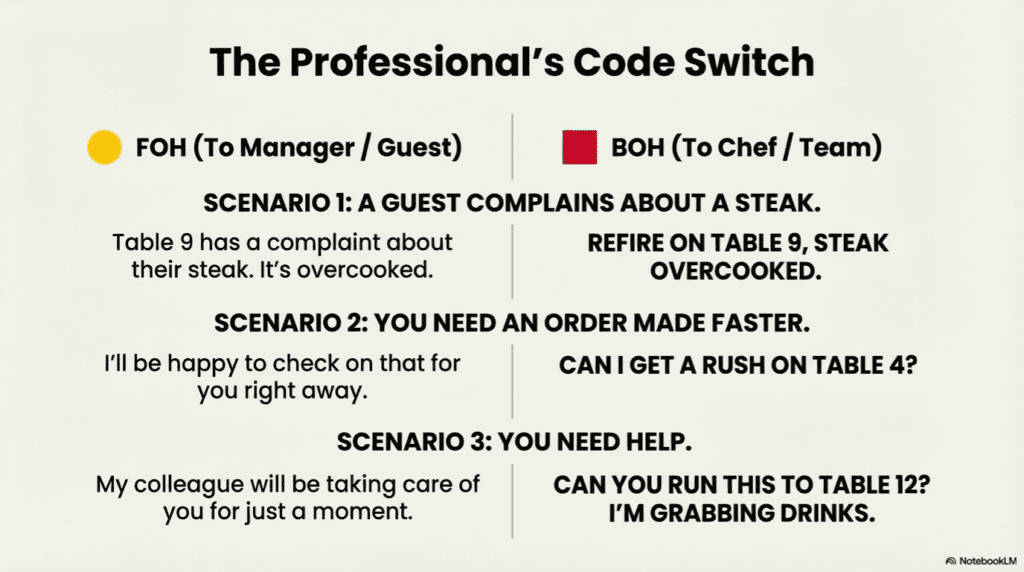
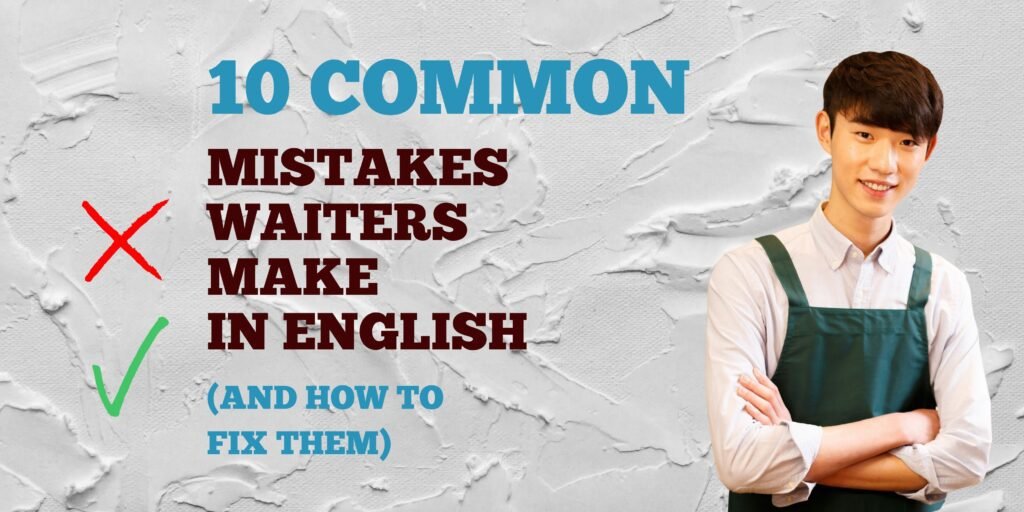
Common mistakes
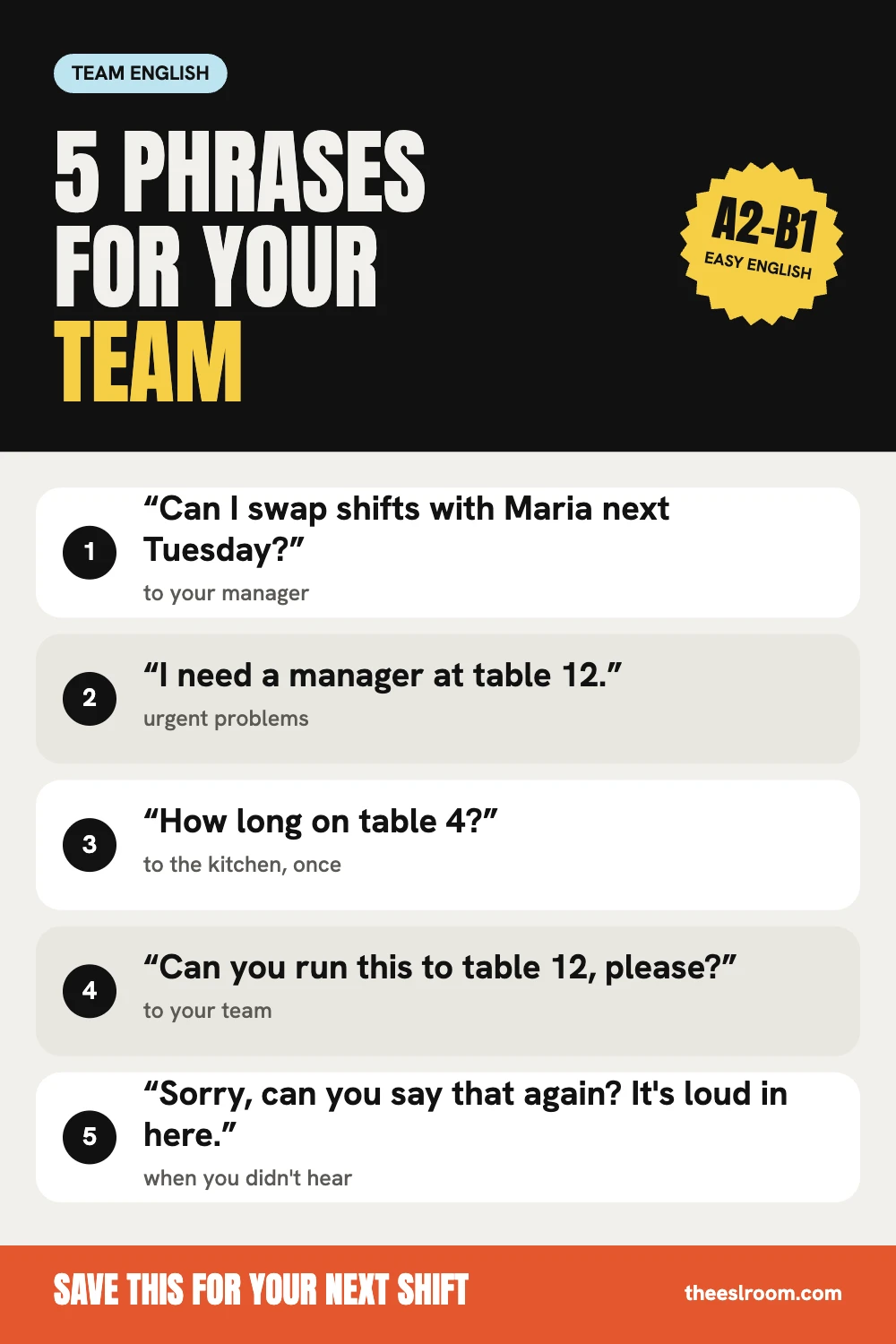
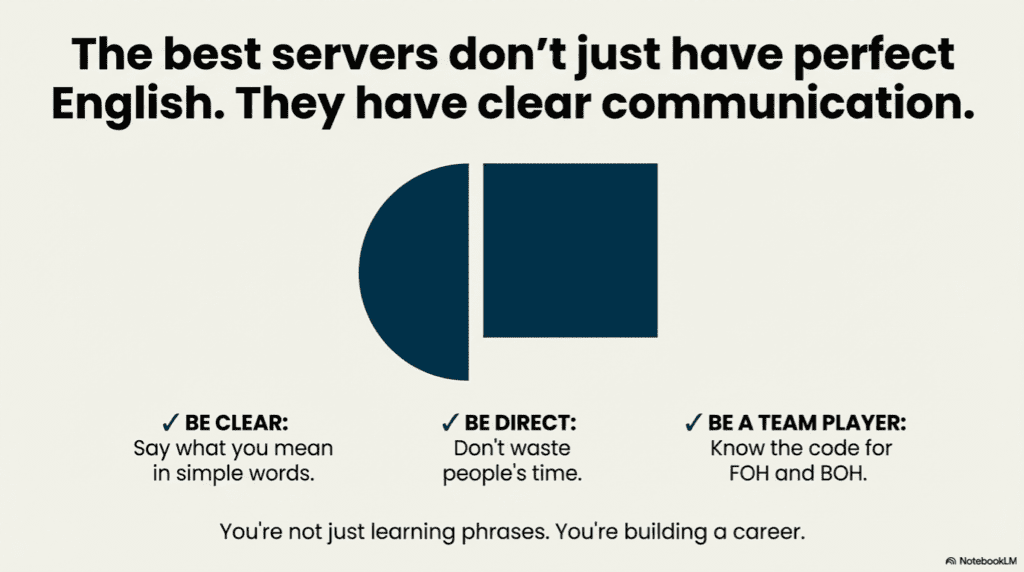
Some of these are too polite, some are too rude. Aim for the middle.
Quick quiz
1. The chef says, “We’re 86 the salmon.” What does it mean?
86 = sold out. Tell your tables before they order it.
2. What’s the best way to ask the kitchen in a rush?
Short and clear, not too polite and not rude.
3. Your manager corrects you during service. What do you say?
Never argue during service. Talk later, in private.
FAQ
How should I talk to my restaurant manager?
Be short, clear and polite. Use “Can I…?” for requests and “I need…” when something is urgent.
What does “heard” mean in a kitchen?
It means “I understand”. Chefs and servers say it to show they got the message.
Is it rude to be direct with coworkers?
No. In a busy restaurant, short and clear is normal. Just add “please” and “thanks”.
Related guides
- Your first 30 days as a server
- How to ask for a raise or promotion
- Restaurant worker rights and workplace problems
Ready to Go Further?
Ready to Master Restaurant English?
These free articles and scenarios are a great start, but if you want a complete, structured system for learning restaurant English, consider our full course.

English for Waiters includes:
✅ 22+ video lessons covering every restaurant situation
✅ Real restaurant scenarios with native pronunciation
✅ Interactive pronunciation practice
✅ Downloadable phrase guides
✅ Lifetime access with free updates