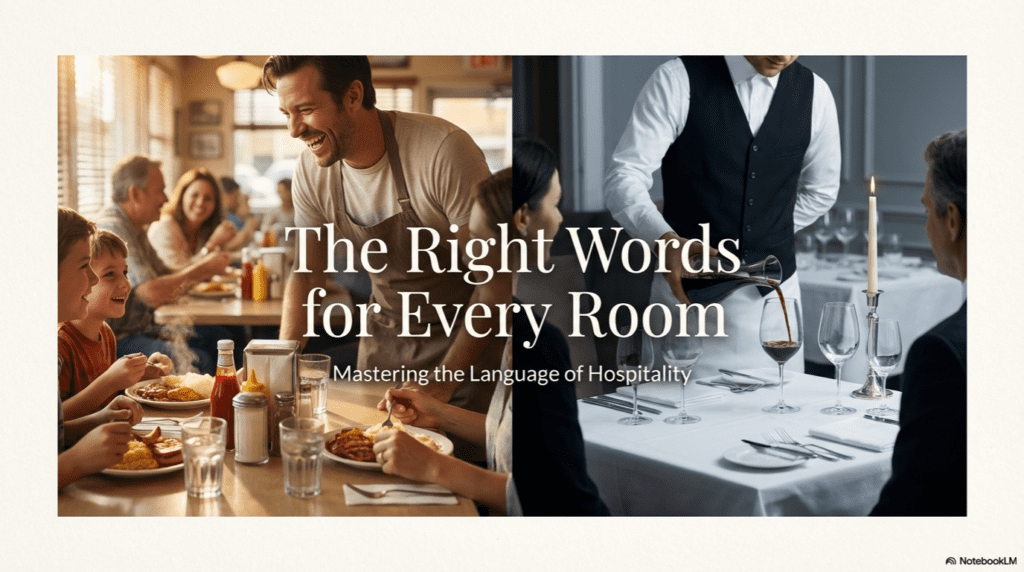
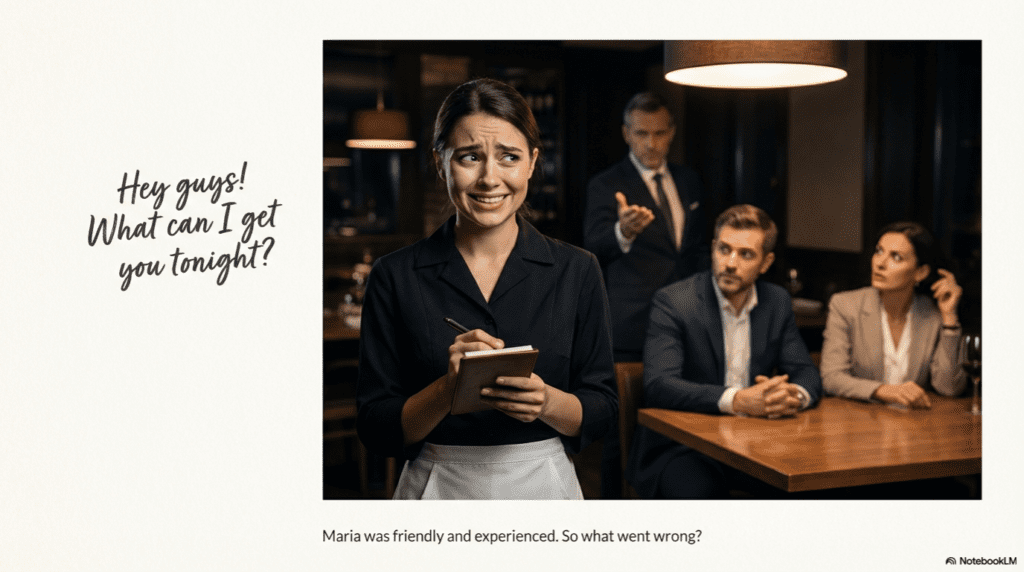
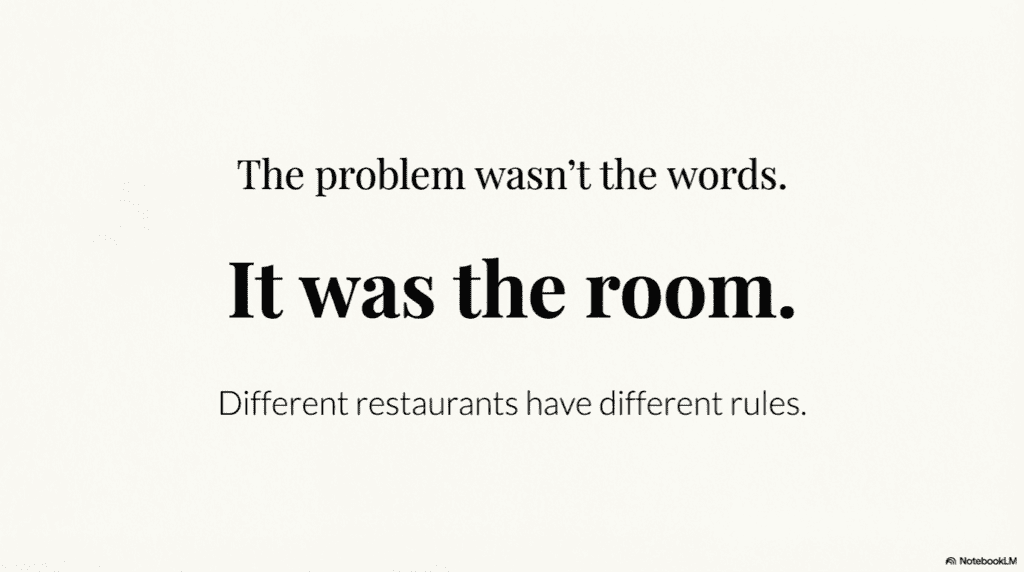
Formal vs casual restaurant English is a big question for new waiters. “Hey guys!” is perfect in a burger bar. In a fine dining restaurant, it sounds wrong.
In this guide you’ll learn when to say “May I”, “Can I” and “Would you like”, with formal and casual versions of the most useful phrases. Tap 🔊 to hear each one.
Want to practise this with video? See the English for Waiters course →
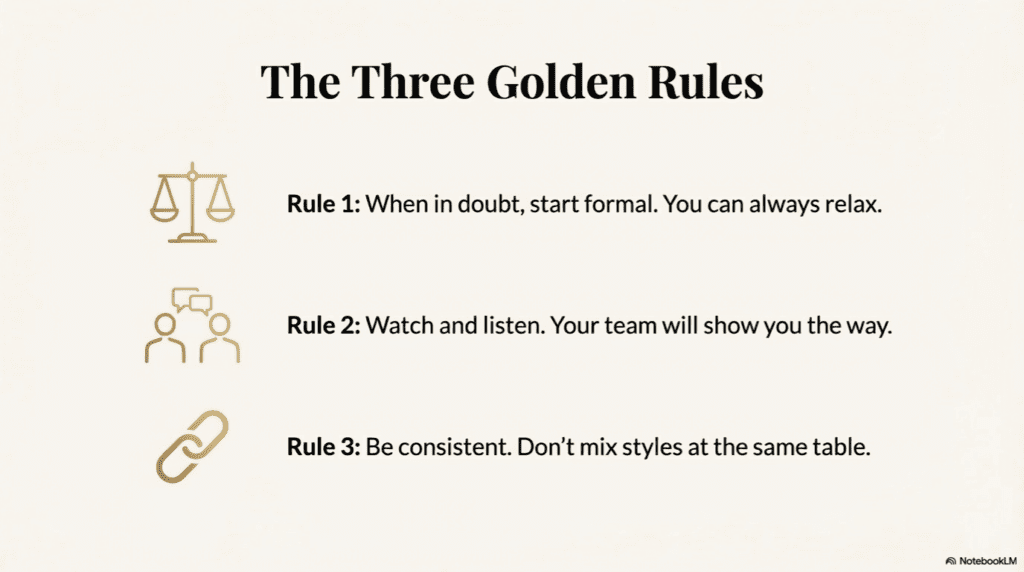
The safe rule: start polite, then match the guest
Not sure which style to use? Start a little formal. Then listen to the guest.
If the guest is relaxed and chatty, you can relax too. If the guest is quiet and formal, stay formal.
Why? It’s easy to become more casual later. It’s very hard to become formal after “Hey guys!”
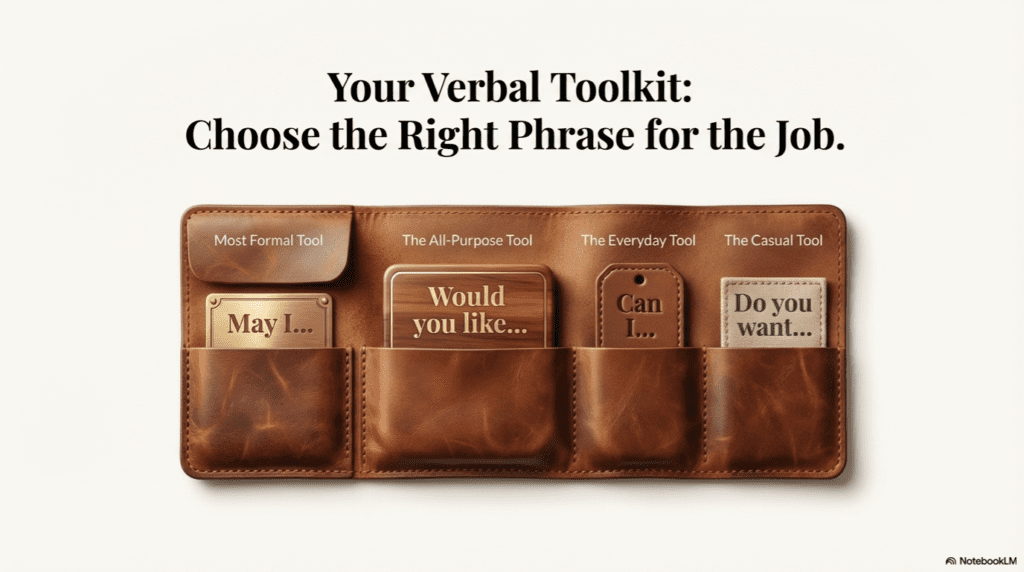
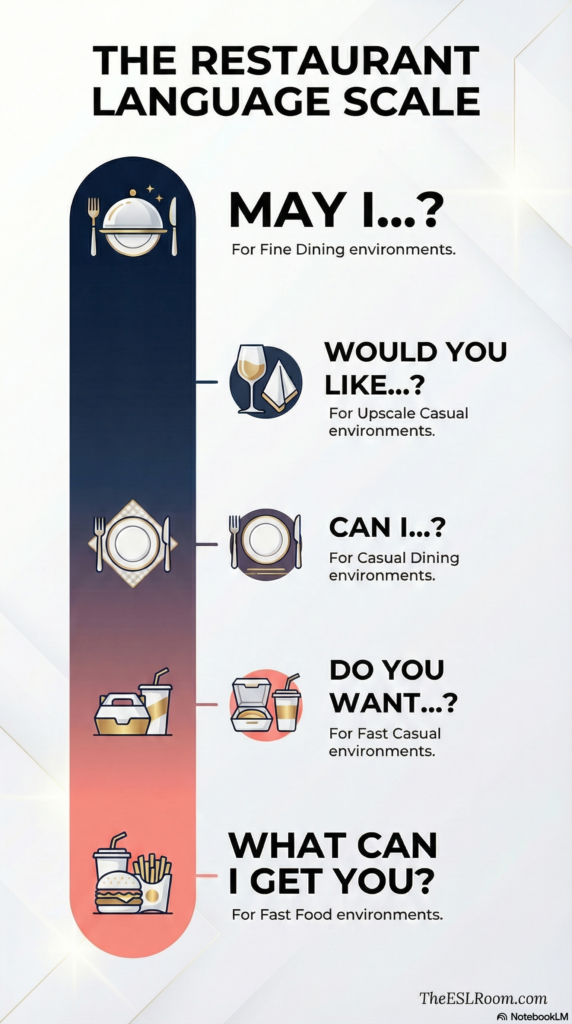
May I, Can I, Would you like: which one?
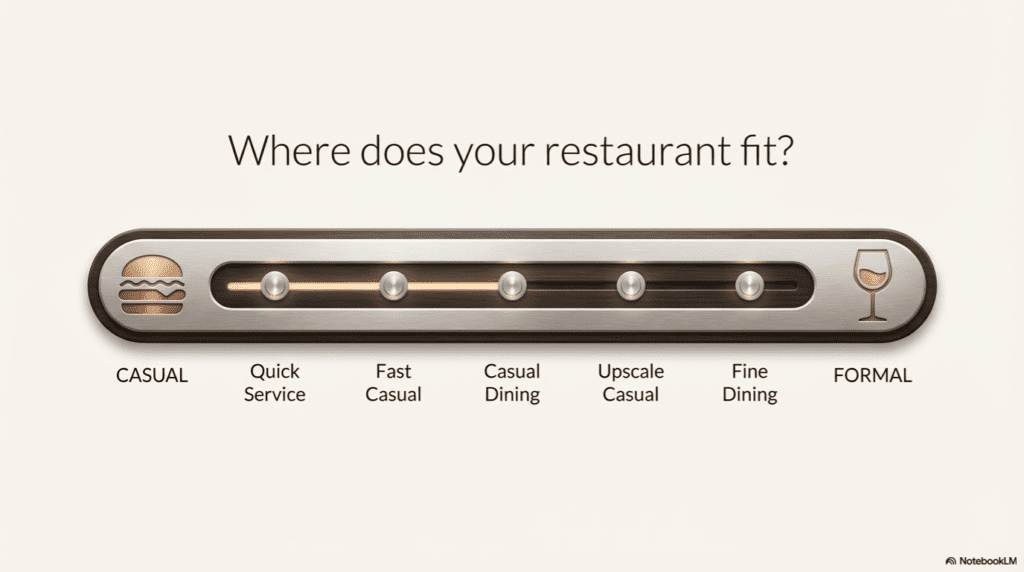
- May I…? = the most formal. Use it in fine dining.
- Can I…? = friendly and polite. Safe in most restaurants.
- Would you like…? = polite and warm. It works in every restaurant.
- Do you want…? = very casual. Only for relaxed places. Never in fine dining.
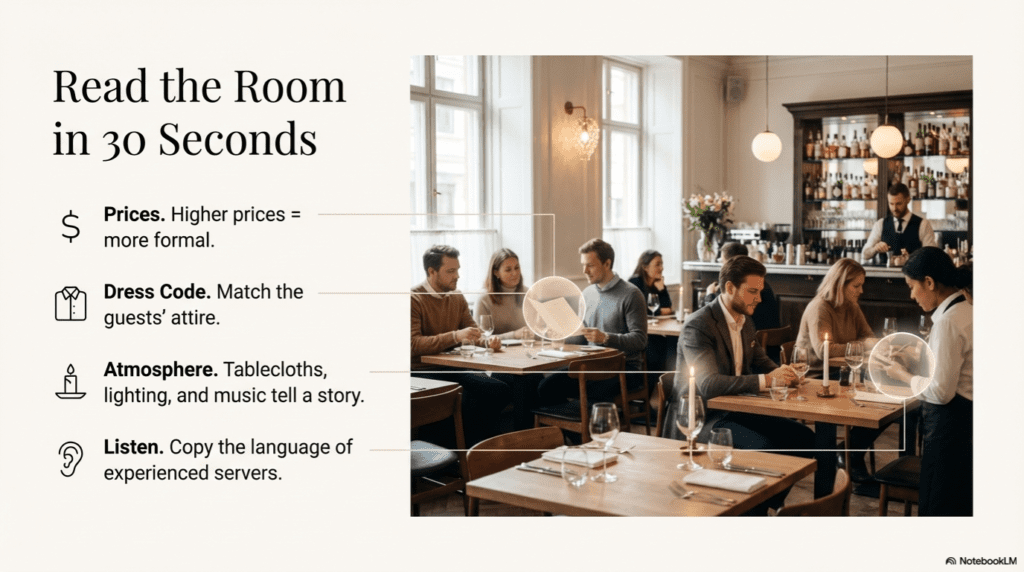
Read your restaurant in 30 seconds
On your first day, look for these clues:
- Prices: main dishes over $40? Use formal English.
- Tables: white tablecloths, candles and many forks? Formal.
- Music and noise: TVs, pop music and kids? Casual.
- Other servers: do they say “Good evening” or “Hi folks”? Copy them.
Formal phrases (fine dining)
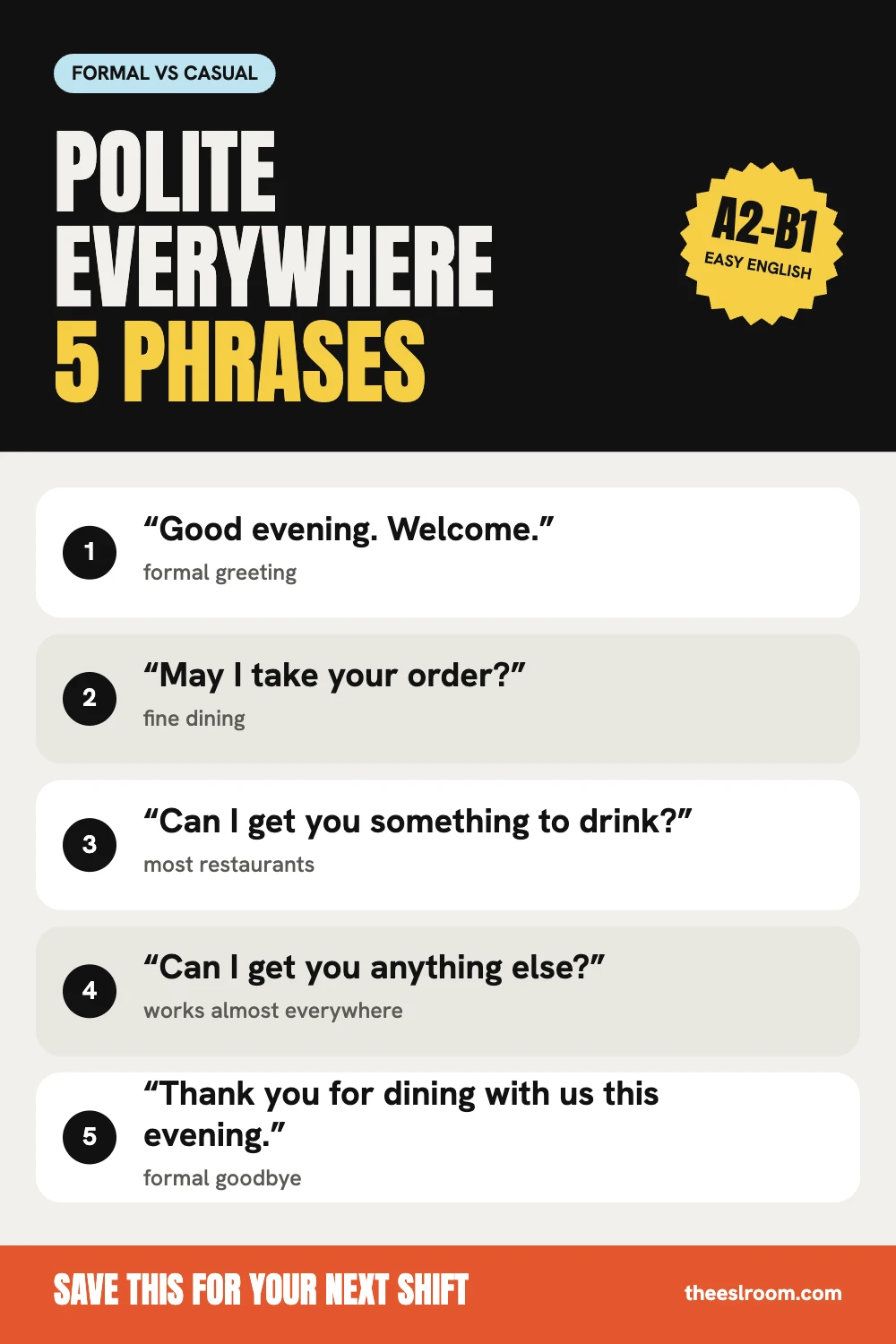
“Good evening. Welcome.”
Formal greeting. Casual: “Hi! Welcome in!”
“May I take your order?”
Casual: “What can I get for you?”
“Would you care for still or sparkling water?”
“Would you care for” = very formal “would you like”. Casual: “Want some water?”
“Is everything to your liking?”
Formal check-back. Casual: “How is everything?”
“May I take your plate?”
Casual: “All done with this?”
“Thank you for dining with us this evening.”
Formal goodbye. Casual: “Thanks for coming in!”
Casual phrases (family restaurants and cafés)
“Hi! How are you today?”
Friendly and normal in the US.
“Can I get you something to drink?”
The safe casual question.
“How’s everything tasting?”
A common casual check-back.
“Can I get you anything else?”
Works almost everywhere.
“Here’s your check. No rush.”
Check = the bill. “No rush” = take your time.
“Thanks for coming in! Have a great night.”
Warm, friendly goodbye.
“Sir” and “madam”: when to use them
In fine dining, “sir” and “madam” are normal. In a hotel restaurant, use them with older or formal guests.
In a casual restaurant, you usually don’t need them. “Of course, I’ll get that for you” is polite enough.
If a guest says “Please, call me John,” then call them John.
Country styles
- USA: most restaurants are casual. Servers often say their name: “Hi, I’m Maria. I’ll be taking care of you.”
- UK: a little more formal. Less small talk.
- Australia: very relaxed, even in nice restaurants.
- Hotels in Asia and the Middle East: often more formal. “Sir” and “madam” are common.
Save this card and look at it before your next shift. On Pinterest? Pin it so you can find it fast.
Formal vs casual restaurant English: example dialogue
Waiter: Good evening. Welcome. May I take your order?
Guest: Oh, no need to be so formal! We’re just here for burgers.
Waiter: Sure thing! What can I get for you?
Guest: Two cheeseburgers and two colas, please.
Waiter: Great choice. Anything else?
Guest: That’s it, thanks.
Waiter: Perfect. I’ll be right back with your drinks.
The waiter started polite. The guest was relaxed, so the waiter matched the guest. That’s the safe rule.
Learn 100+ phrases like these.
Short video lessons for waiters. Self-paced. $19.99, one payment.
Get the course →Common mistakes
Quick quiz
1. Which phrase works in every restaurant?
“Would you like” is polite and warm everywhere.
2. You work in fine dining. A guest wants water. You say…
“May I” is the formal choice for fine dining.
3. Not sure of the style? Start…
It’s easy to relax later, but hard to become formal again.
FAQ
Is “May I” or “Can I” more polite?
“May I” is more formal. “Can I” is friendly and polite, and it’s fine in most restaurants. In fine dining, use “May I”.
Should waiters say “sir” and “madam”?
In fine dining and hotels, yes. In casual restaurants it’s not needed, but it’s not wrong with older guests.
Is “you guys” rude?
In casual American restaurants it’s normal. In formal restaurants, or with older guests, don’t use it.
Related guides
- 10 things you should never say to a restaurant guest
- 10 common mistakes waiters make in English
- Taking orders script: 12 phrases waiters can use
Ready to Go Further?
Ready to Master Restaurant English?
These free articles and scenarios are a great start, but if you want a complete, structured system for learning restaurant English, consider our full course.
English for Waiters includes:
✅ 22+ video lessons covering every restaurant situation
✅ Real restaurant scenarios with native pronunciation
✅ Interactive pronunciation practice
✅ Downloadable phrase guides
✅ Lifetime access with free updates