
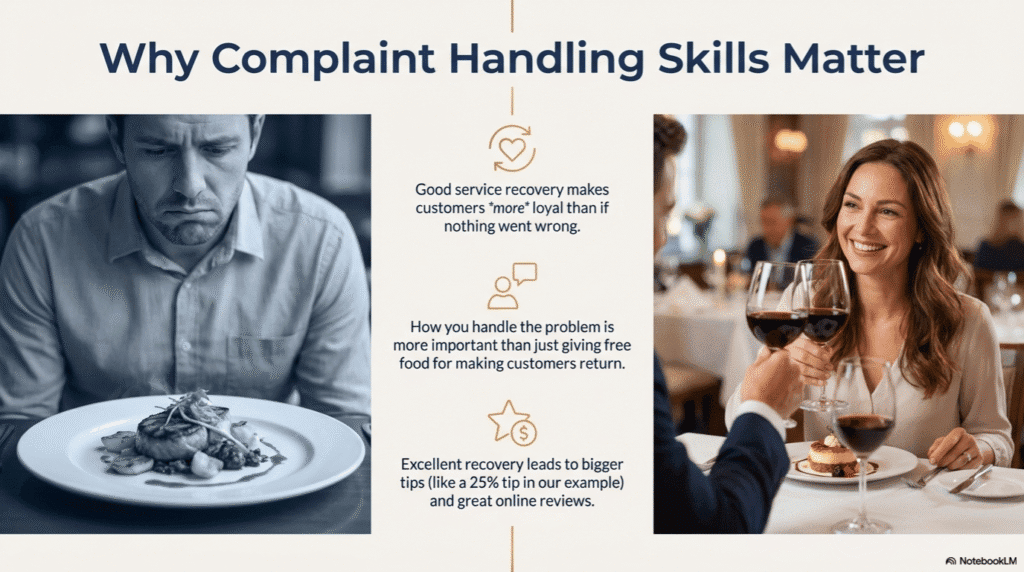
Learning how to handle food complaints calmly is a big part of being a good server. A steak is overcooked. A soup is too salty. It happens in every restaurant.
In this guide you’ll learn a simple service recovery script, from noticing the problem to the final bill. Tap 🔊 to hear each phrase.
Want to practise this with video? See the English for Waiters course →
Spot it before they say it
The best servers don’t wait for a complaint. They notice the problem first.
Look for these signs: food not eaten after a few minutes, a guest cutting the food but not eating, or a quiet, unhappy face. When you see one, go to the table straight away.
Many guests don’t like to complain. If you ask first, you make it easy for them.
Step 1: Ask and listen
“Is the steak cooked okay for you?”
Ask about the exact dish. “How is everything?” is too easy to answer with “fine”.
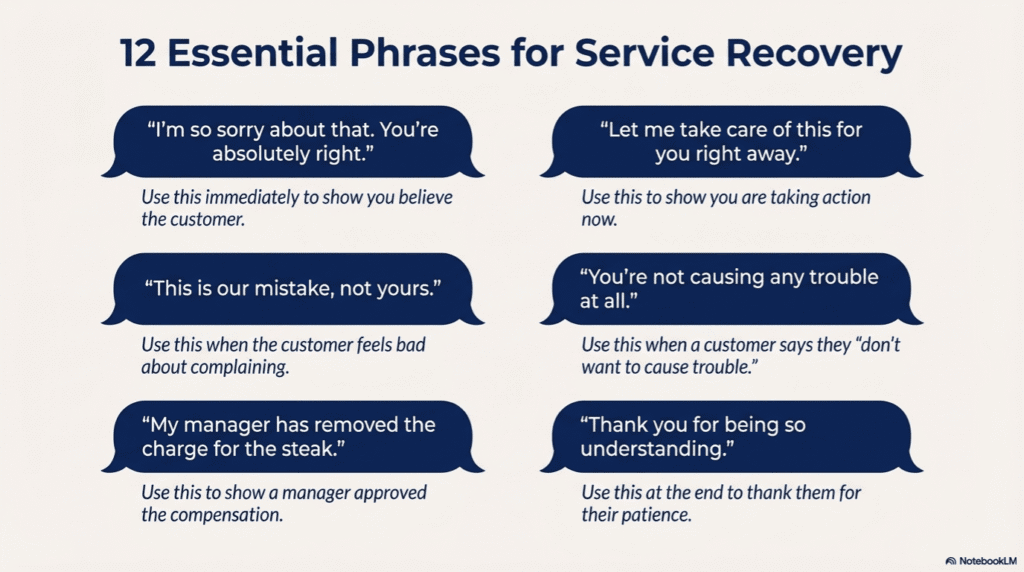
“I’m so sorry about that. You’re absolutely right.”
Say this as soon as the guest explains. No “Are you sure?”
“Please don’t worry. You’re not causing any trouble at all.”
For guests who feel bad about complaining.
Step 2: Fix it fast
“Let me take this back and get you a new one cooked properly.”
Don’t ask “Do you want a new one?” Just offer it.
“A new steak will take about twelve minutes.”
Always give a real time. Ask the kitchen if you’re not sure.
“While you wait, can I bring you some bread or a side?”
Something to eat makes the wait feel shorter.
“I’ll speak to the chef myself.”
Shows the guest you are taking it seriously.
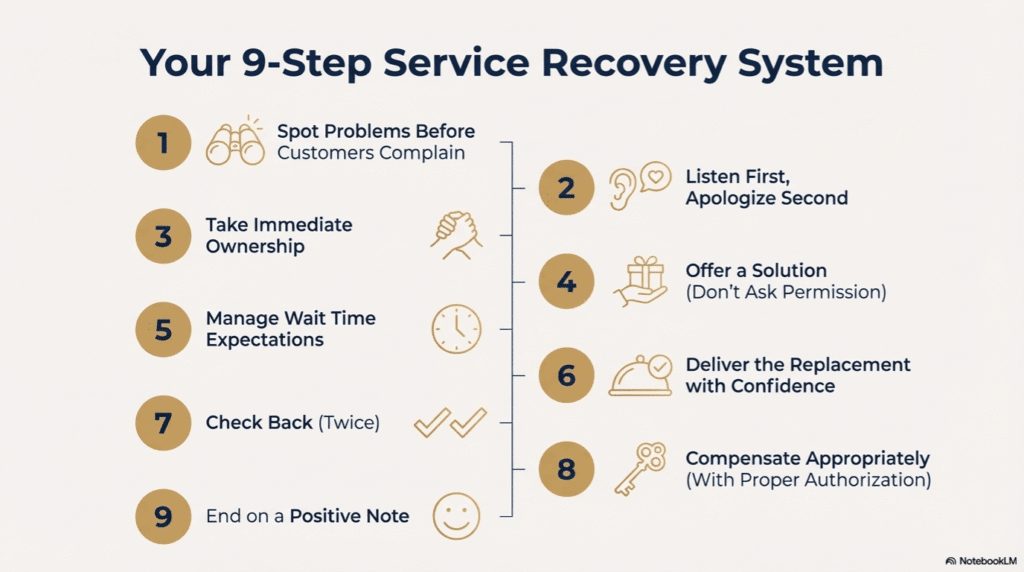
Step 3: Check back twice
“Here’s your steak, medium rare. I’ll check back in a moment.”
Bring it, then step away. Let the guest try it in peace.
“How is the steak this time?”
First check: two or three minutes later.
“Was everything cooked well all the way through?”
Second check: near the end of the meal.
Step 4: Say sorry with something extra
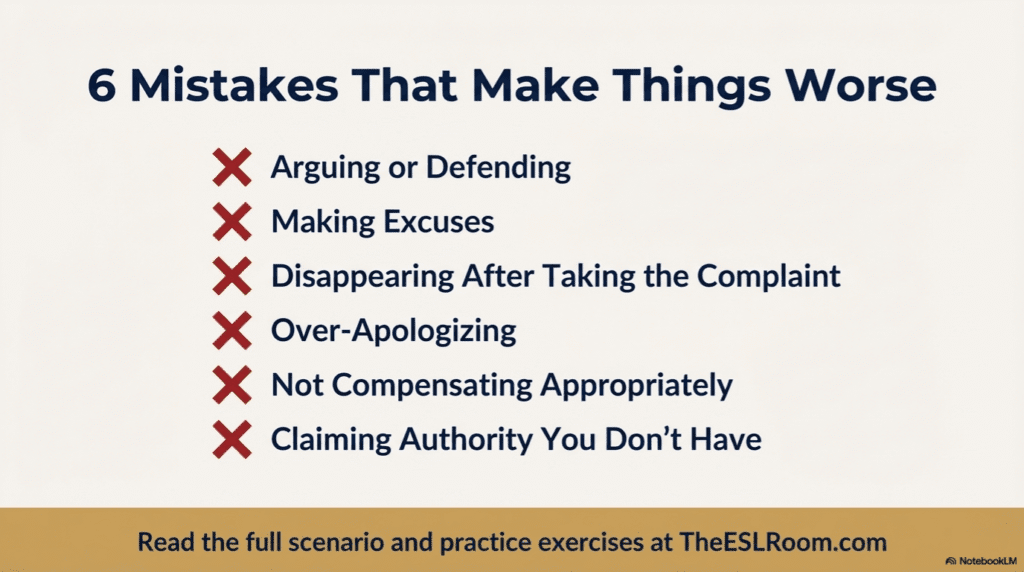
For a small problem, a sorry and a fix is often enough. For a bigger problem, offer something extra. Know what you can offer before your shift.
- You can often offer: bread, a drink, a free dessert.
- Your manager usually decides: taking a dish off the bill, or a discount on the whole meal.
“Because of the mix-up, we’d like to offer you a free dessert.”
“Free” or “complimentary”. Both are fine.
“My manager has taken the steak off your bill.”
Only say this if your manager really said yes.
“Thank you for being so understanding.”
End on a warm note.
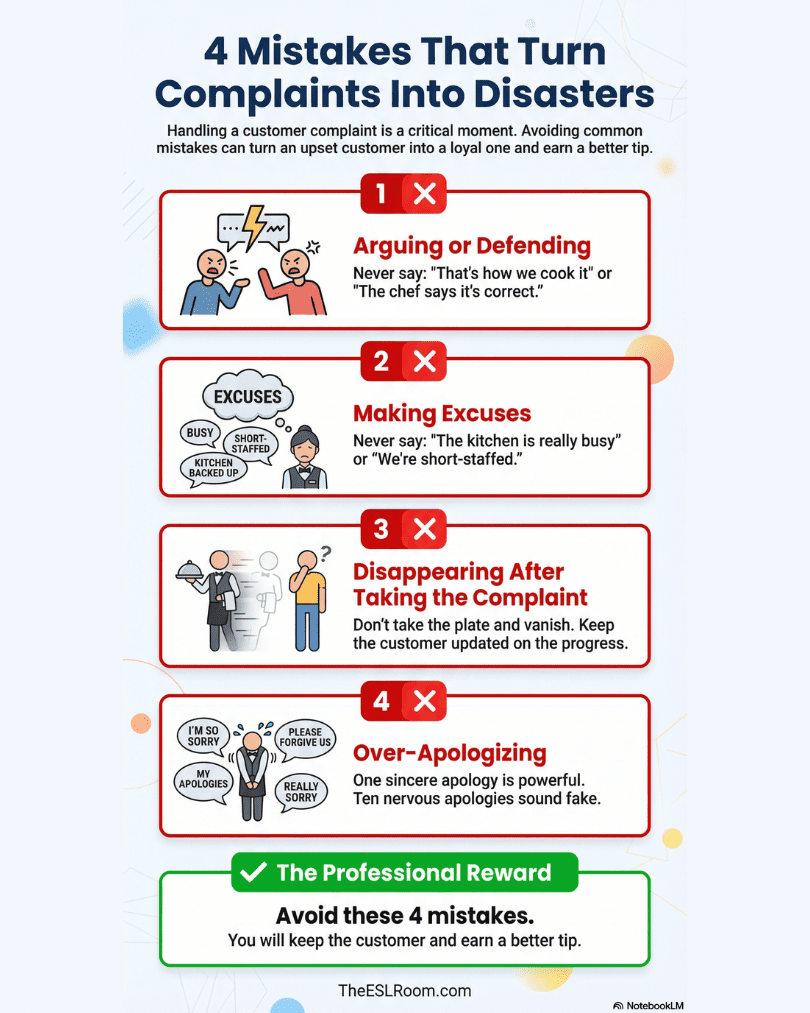
Save this card and look at it before your next shift. On Pinterest? Pin it so you can find it fast.

How to handle food complaints: example dialogue
Waiter: Is the steak cooked okay for you?
Guest: Well… I asked for medium rare, but this is well done.
Waiter: I’m so sorry about that. You’re absolutely right.
Waiter: Let me take this back and get you a new one cooked properly. It will take about twelve minutes.
Guest: Oh, I don’t want to cause any trouble.
Waiter: Please don’t worry. You’re not causing any trouble at all. While you wait, can I bring you some bread?
Guest: That would be lovely, thank you.
Waiter: Here’s your steak, medium rare. I’ll check back in a moment.
Waiter: How is the steak this time?
Guest: It’s perfect now. Thank you.
The waiter spotted the problem, fixed it fast, and checked back. The guest leaves happy.
Learn 100+ phrases like these.
Short video lessons for waiters. Self-paced. $19.99, one payment.
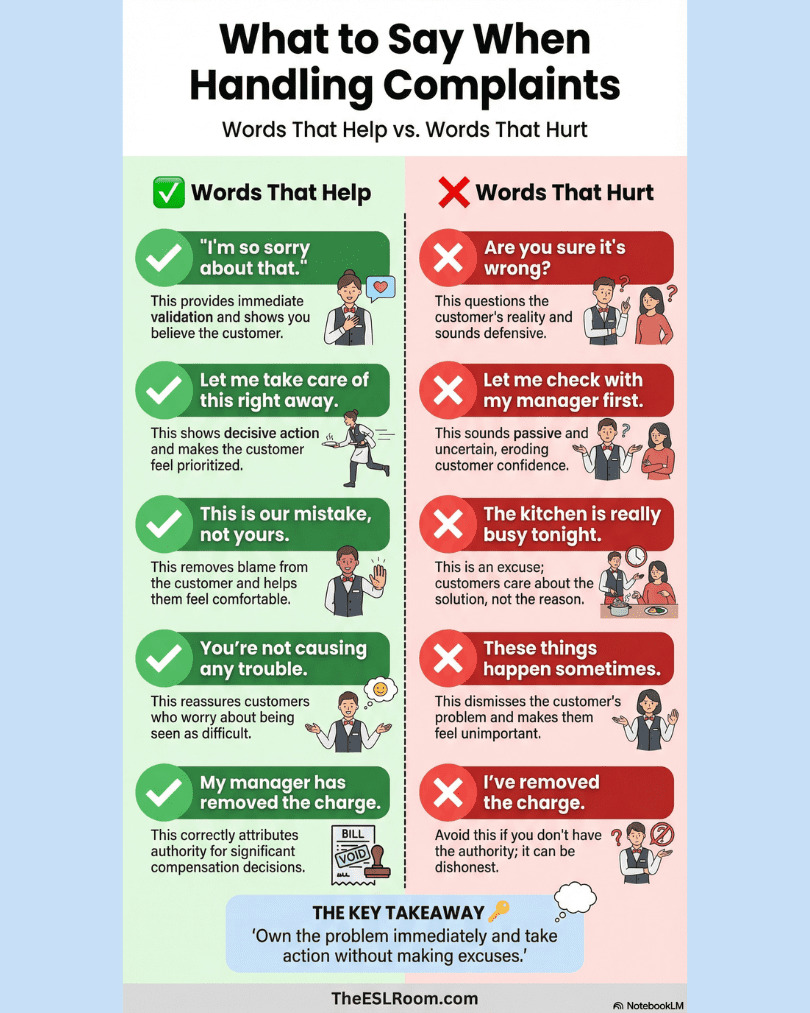
Get the course →Common mistakes
Quick quiz
1. A guest isn’t eating their food. You…
Spot problems early. Many guests don’t like to complain.
2. Which question is better?
Asking about the exact dish gets an honest answer.
3. How many times do you check back on a new dish?
Once after a few minutes, once near the end.
FAQ
How do you handle a food complaint as a server?
Say sorry, offer to fix it straight away, give a real time, and check back twice. Offer something extra for bigger problems.
Can a server take food off the bill?
It depends on the restaurant. Usually a manager decides. Ask your manager what you can offer before your shift.
What if the guest says “Don’t worry, I’ll just eat it”?
Say “Please don’t worry. You’re not causing any trouble at all,” and offer a new dish anyway.
Related guides
- How to handle customer complaints in English
- Customer complaint scripts, word for word
- How to greet an angry customer
Ready to Go Further?
Ready to Master Restaurant English?
These free articles and scenarios are a great start, but if you want a complete, structured system for learning restaurant English, consider our full course.

English for Waiters includes:
✅ 22+ video lessons covering every restaurant situation
✅ Real restaurant scenarios with native pronunciation
✅ Interactive pronunciation practice
✅ Downloadable phrase guides
✅ Lifetime access with free updates